


Staffordshire, England
Please click on images to expand.
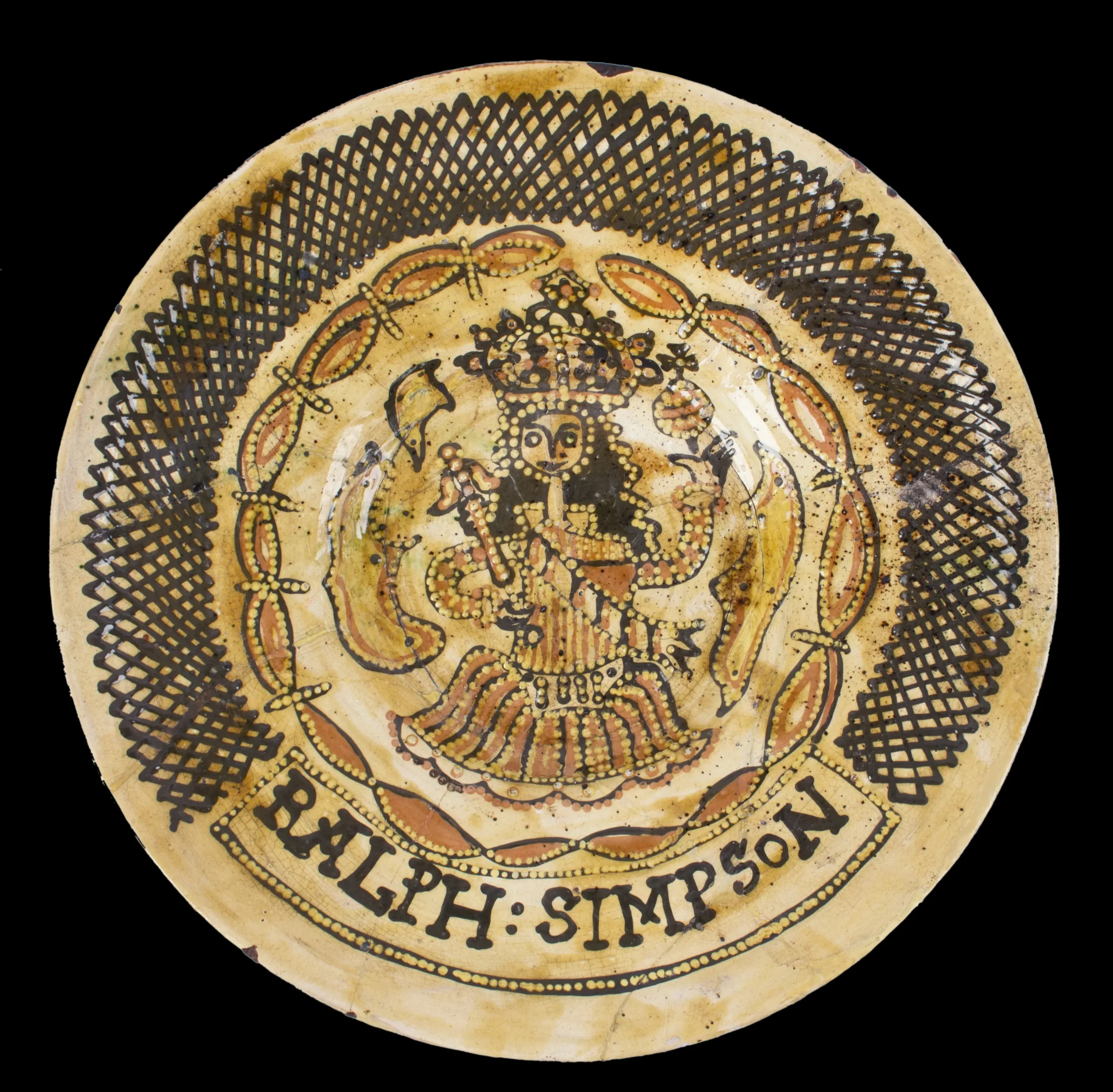
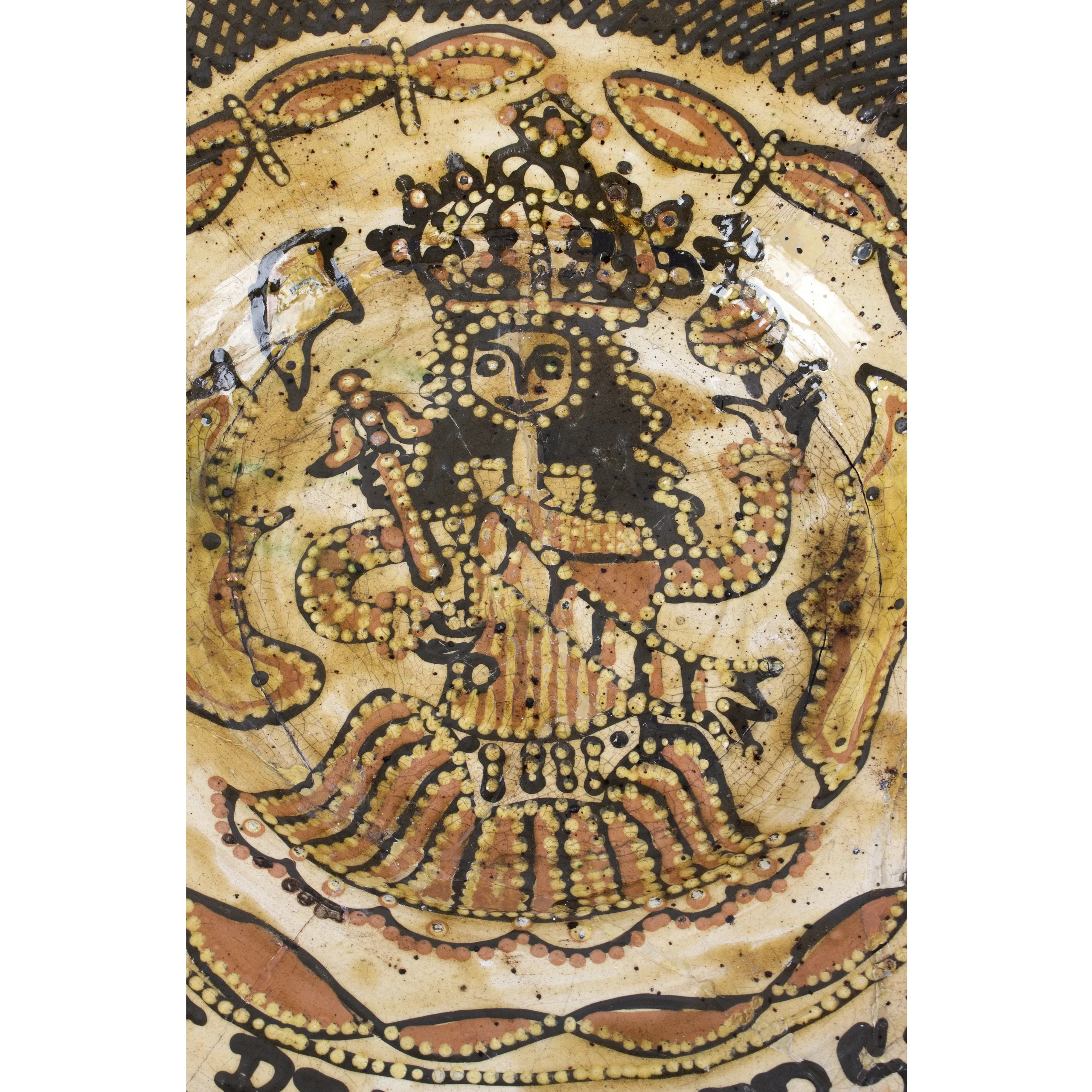
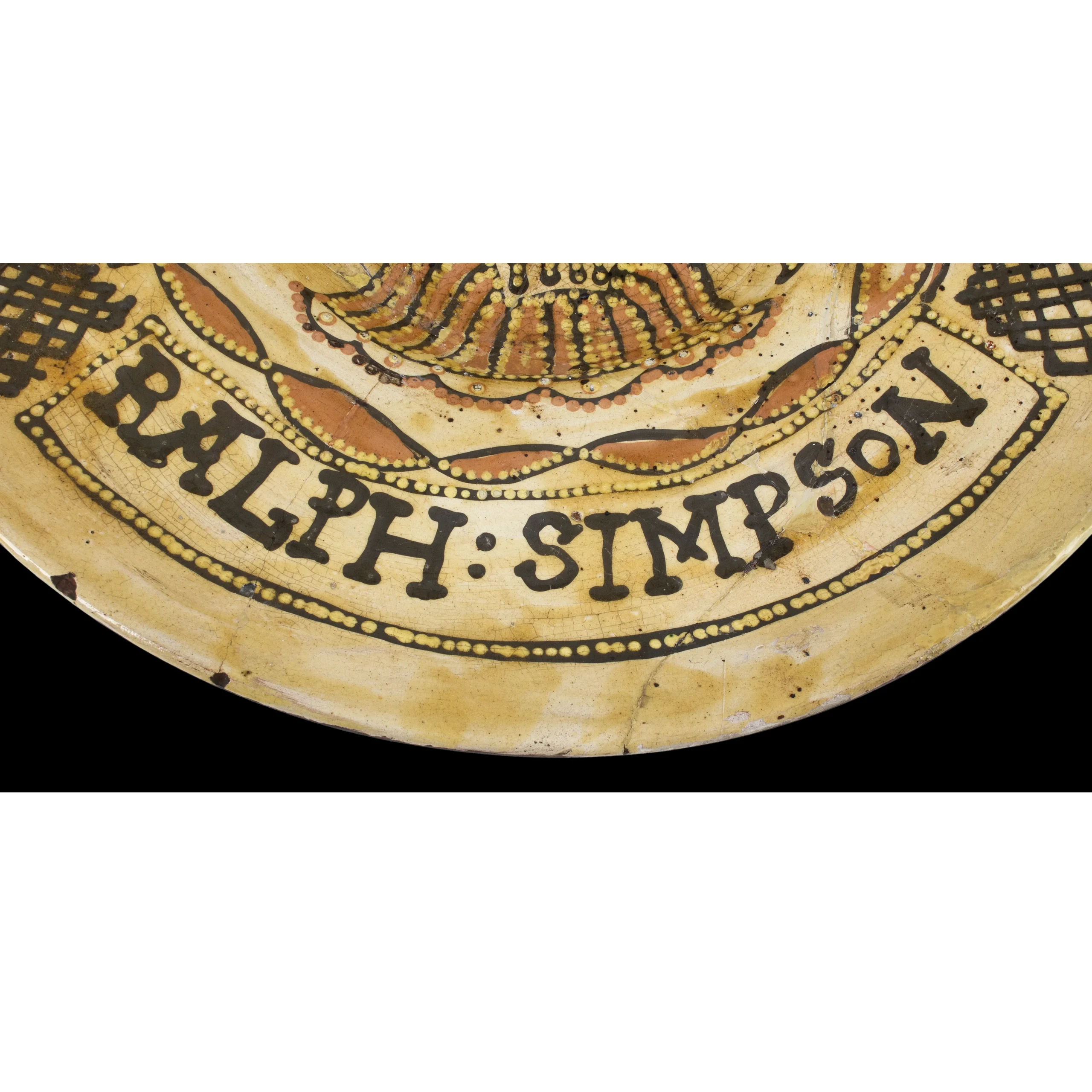
Boldly signed at bottom rim “Ralph Simpson”, cream ground decorated in dark and light brown slip decoration featuring trellis border and chain of linked ellipses centering portrait of a crowned King William III with royal accoutrements of orb and scepter.
Ralph Simpson (1651-1721) was one a family of the most prominent Burslem, Staffordshire potters of the late 17th century, known specifically for his masterful slipware chargers. His “King William III” chargers are highly prized museum-grade pieces that depict the monarch following the Glorious Revolution of 1688. Simpson was a contemporary of the famous Thomas Toft, and his work followed the “Toft style” – large, lead-glazed earthenware dishes decorated with liquid clay (slip) trailed onto the surface.
Like this one, The King William III chargers typically feature a central portrait of the King, holding an orb and scepter. The rims are almost always decorated with a distinctive trellis border (a crosshatch pattern) and Simpson’s signature, “RALPH SIMPSON,” trailed in slip at the bottom. These were made as display pieces, not for dining.
There was probably two Ralph Simpsons, father and son, and it is thought that the one mentioned above who made these chargers is the son.
Related chargers by Ralph Simpson are in the collections of the Metropolitan Museum of Art, the British Museum and the Victoria and Albert Museum.
Item Date: Circa 1690's
Measurement: Diameter: 19" (3" x 19" x 18-3/4")
Material: Pottery/Ceramic
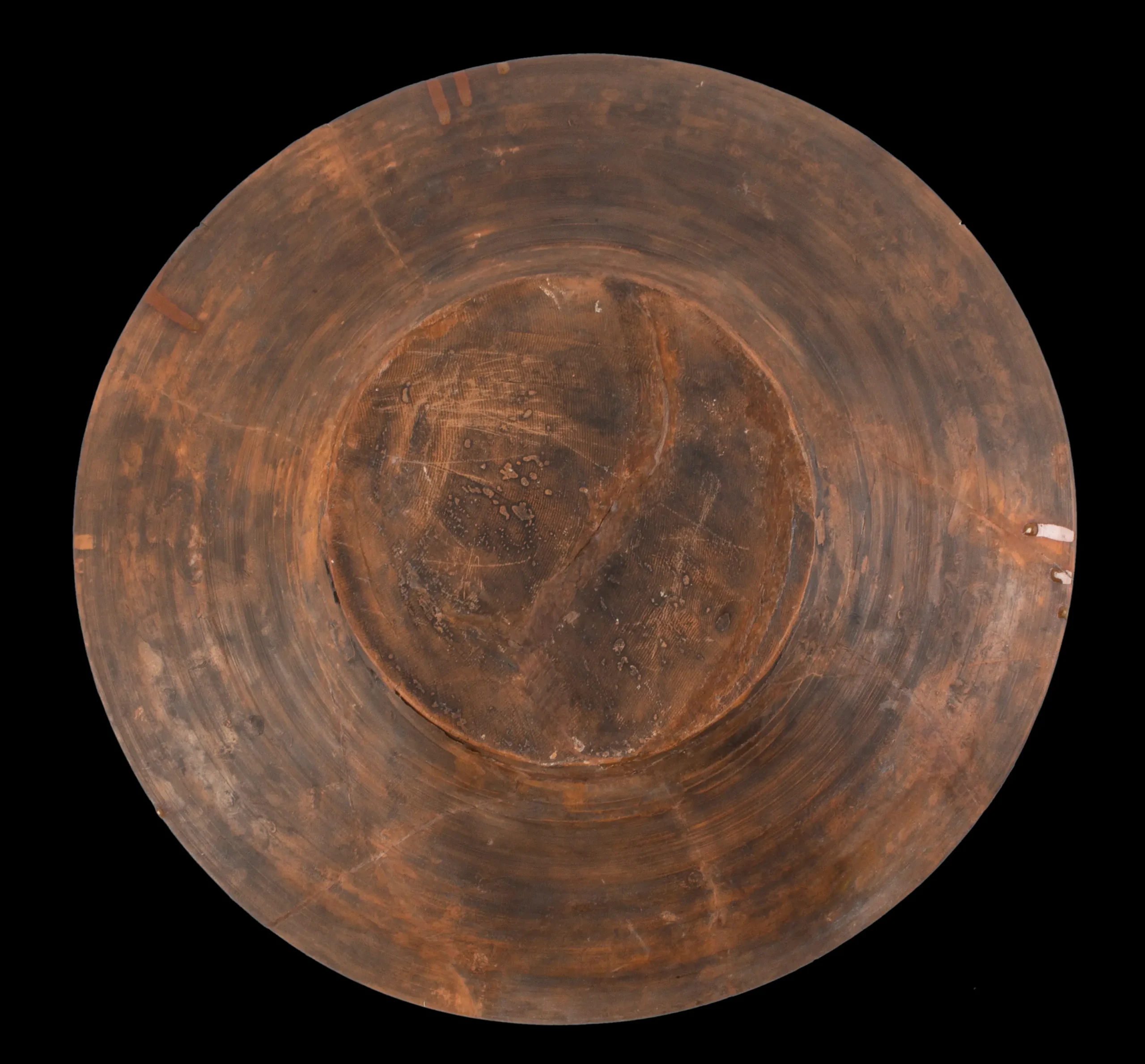
Item Condition: Broken into several pieces, probably more than once, but all the pieces are/were retained without losses. Recently museum repaired to very attractive condition.
Price: $28,000
SKU 843-680
For More Information, Please Contact David Hillier at 978-597-8084 or email drh@aaawt.com.