


Outstanding Codfish Decoration, form, and condition


Please click on images to expand.
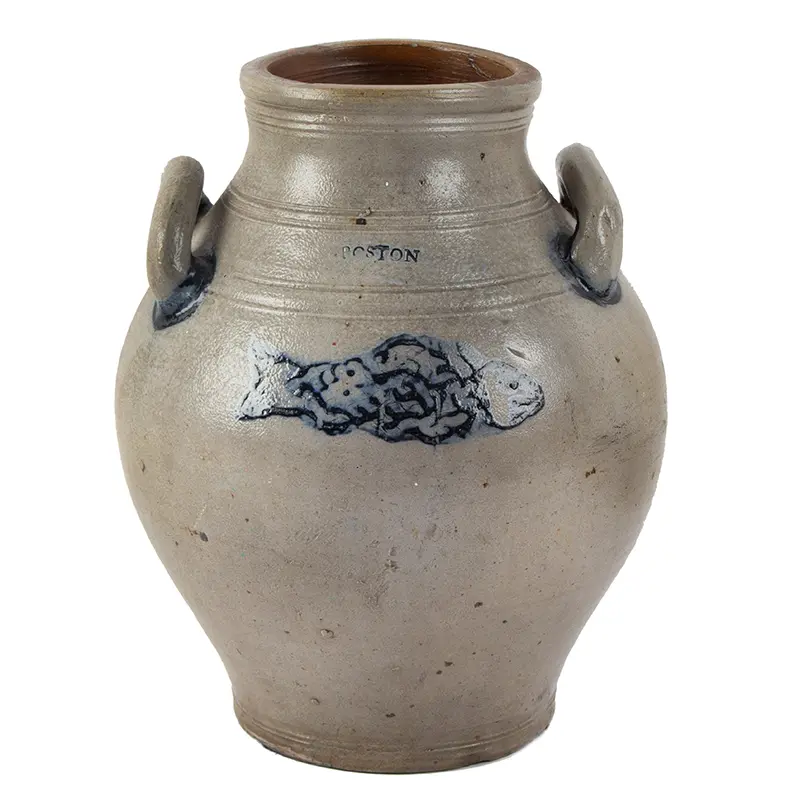
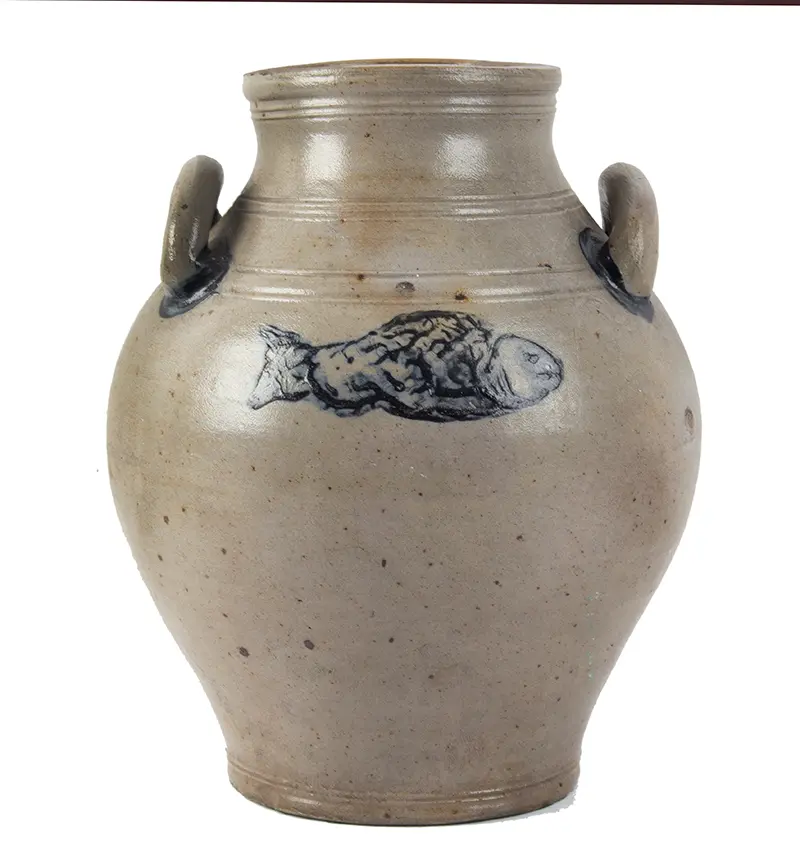
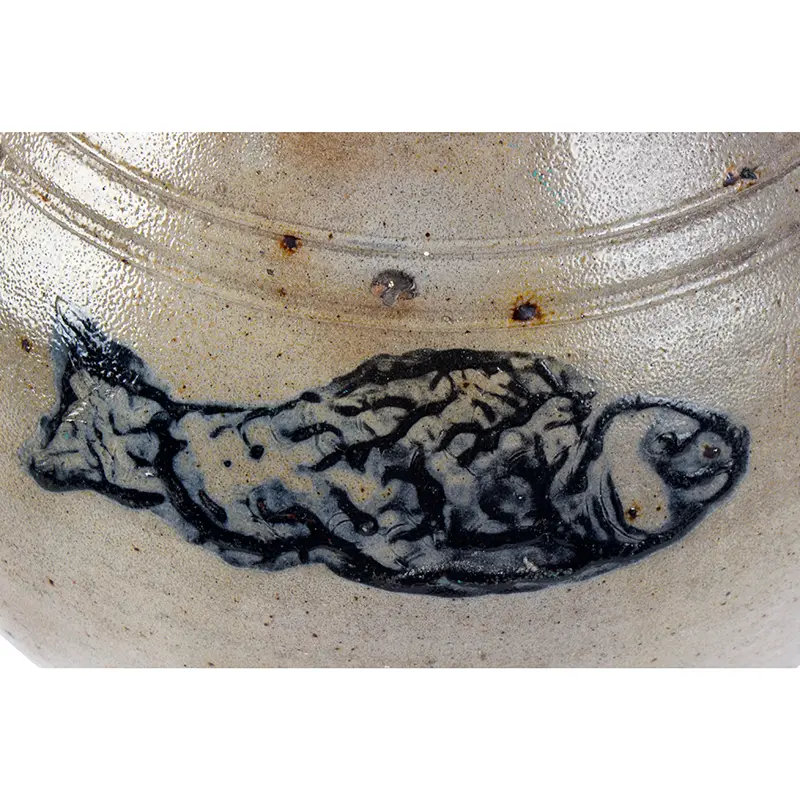
Dating to the brief period between 1793 and 1796, this significant, ovoid stoneware jar by Jonathan Fenton (1766–1851) represents one of the earliest branded examples of Massachusetts pottery, featuring double open-loop handles and a beautifully preserved, sponged cobalt fish decoration. These vessels, produced at Boston’s historic Lynn Street Pottery, are highly celebrated as some of the earliest marked American stoneware in existence. Born in Connecticut, Fenton relocated to Boston and partnered with Frederick Carpenter to establish the city’s very first successful stoneware kiln. Because local New England clay was not suitable for salt-glazing, they imported high-quality clay from New Jersey to craft highly durable vessels heavily influenced by German and English ceramic traditions. While successful, Fenton’s operation on Lynn Street was short-lived; historical tax and property records indicate he left Boston by May 1796 to relocate to northern New England. Consequently, any surviving piece bearing his distinct Boston markings possesses a strictly narrow, highly prized production window.
What makes a Fenton Boston jar exceptionally significant today is this distinctive, cobalt-highlighted decoration, which was tailored specifically to appeal to regional consumers. While Fenton detailed his vessels with traditional incised rings and tooled shoulders, the defining feature remains the impressed motifs filled with vibrant blue glaze. These localized decorations commonly included a New England codfish or flowers, among other seasonal stamps. Furthermore, some pieces prominently display a bold, block-letter “BOSTON” maker’s mark or an ornate, rope-bordered cartouche bearing Fenton’s script initials, “J.F.”
Item Date: 1793 - 1796
Measurement: 12 3/8”
Material: Stoneware
Item Condition: Excellent
SOLD
SKU 1500-24
For More Information, Please Contact David Hillier at 978-597-8084 or email drh@aaawt.com.