


Likely Southeastern Pennsylvania
Please click on images to expand.
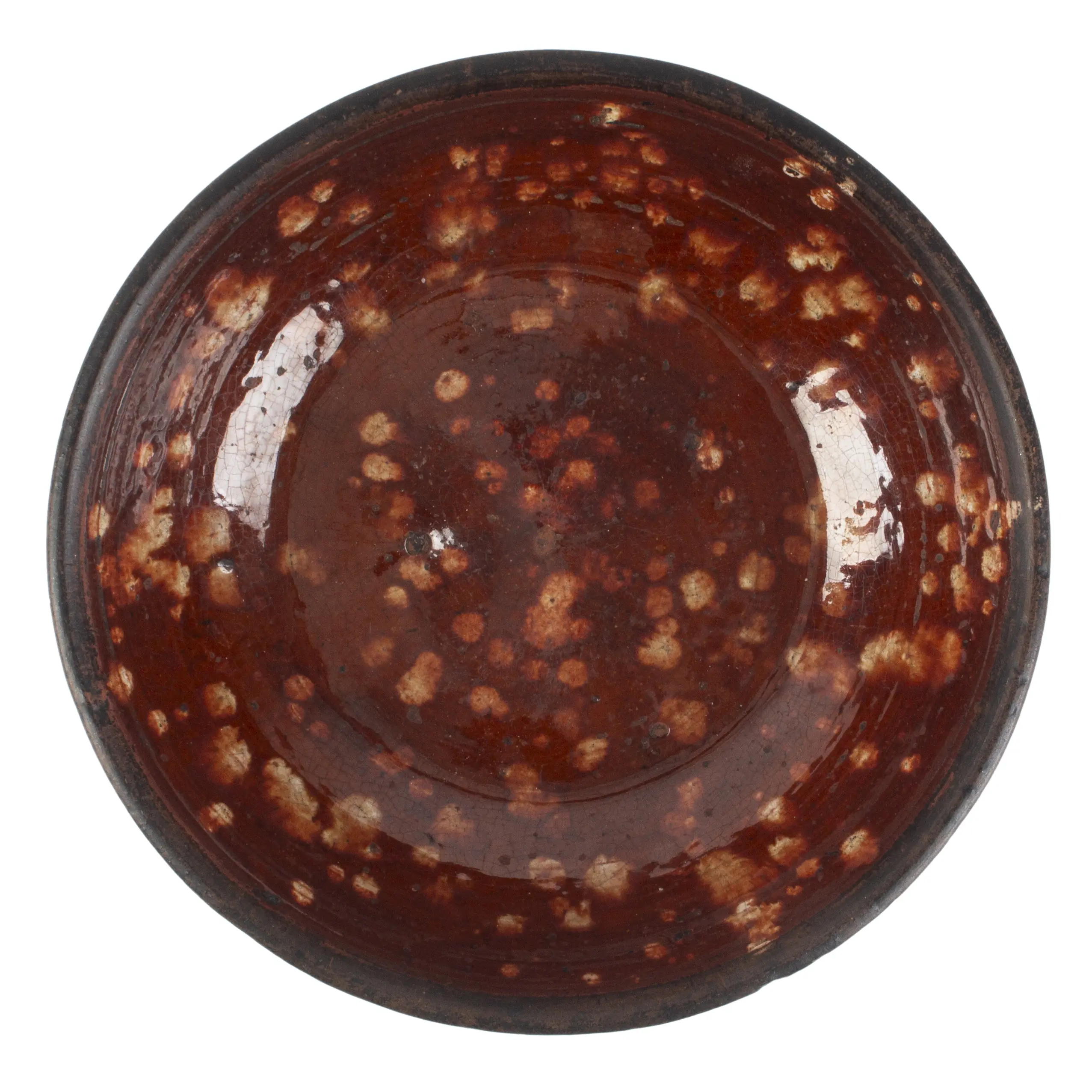
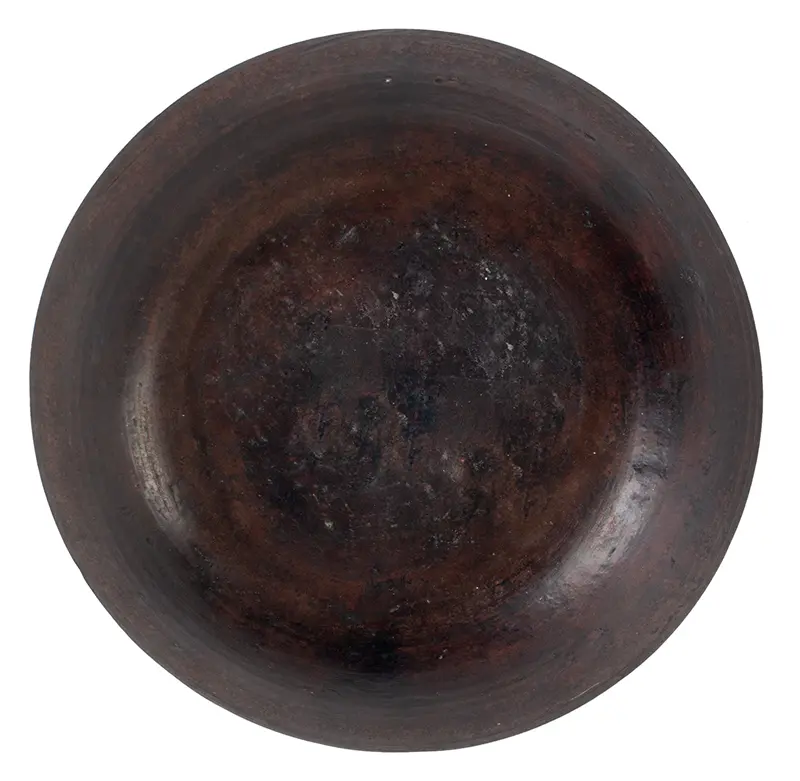
This mid-nineteenth century slip decorated red earthenware plate is likely from Pennsylvania and is adorned in a very unusual spotted slip decoration. Interestingly, Polka dots gained massive popularity in the mid-1800s, driven by a “polka craze” for the music and dance, with the pattern appearing on garments by the 1840s and in Godey’s Lady’s Book in 1857, which originated in Philadelphia. Furthermore, in 1860, polka dots in America were at the height of their first major fashion craze. Named after the “Polka” dance phenomenon that swept Europe and America from the 1840s to 1860s, the pattern consisted of perfectly round, evenly spaced dots made possible by the mechanized weaving of the Industrial Revolution. This plate may have been inspired by the polka craze.
Item Date: Circa 1840 - 1860
Measurement: 7” in Diameter
Material: Redware
Item Condition: Overall condition is good
Literature: The best example of an object adorned with evenly spaced dots is likely a circa 1820-1840 Morgantown, West Virginia red earthenware pitcher owned by the Smithsonian Institution and illustrated in Figure 47 in an article published in the 2004 issue of Ceramics in America, titled, The Potters and Pottery of Morgan's Town, Virginia: The Earthenware Years, Circa 1796-1854.
Price: $1,250
SKU 1120-191
For More Information, Please Contact David Hillier at 978-597-8084 or email drh@aaawt.com.