


Peter Stretch became the first, preeminent clockmaker of early Philadelphia



Please click on images to expand.
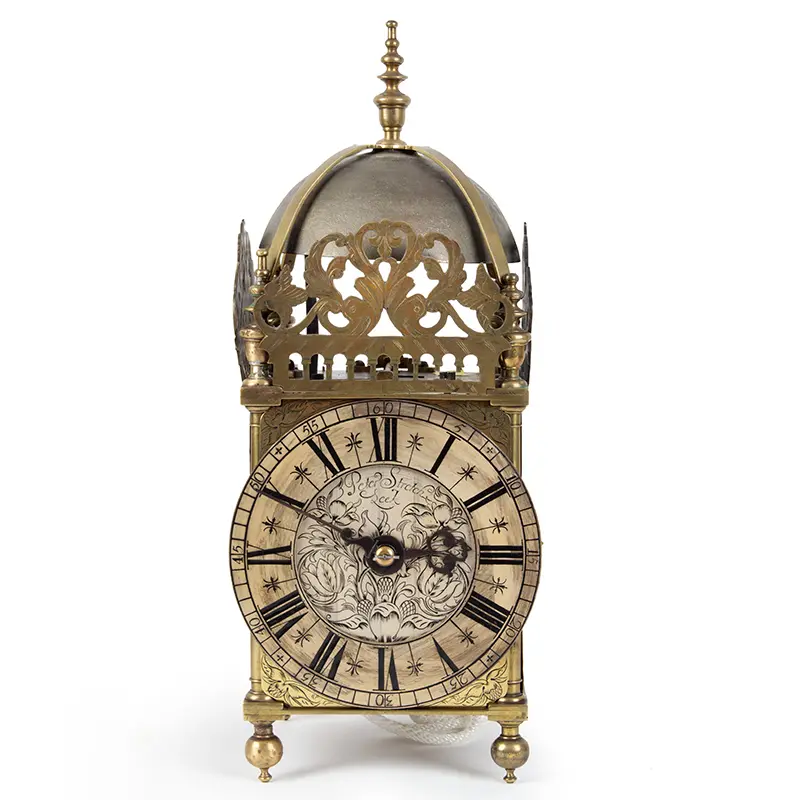
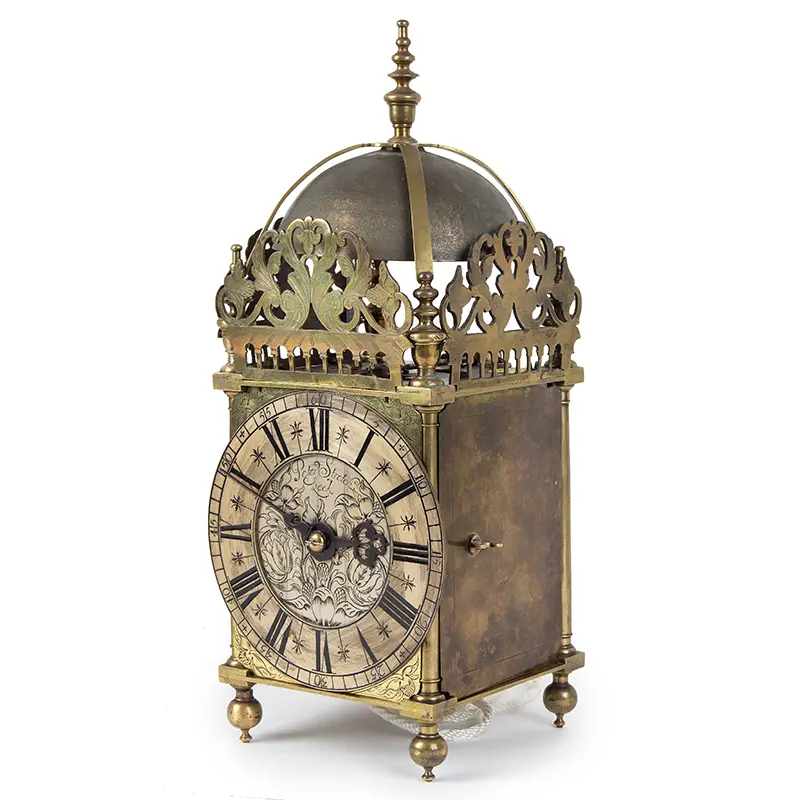
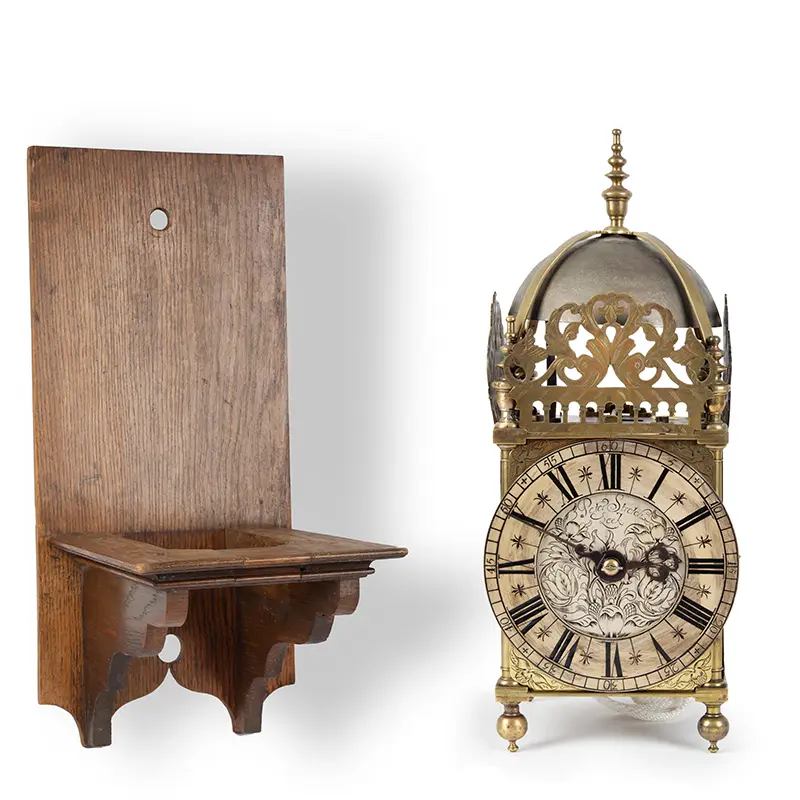
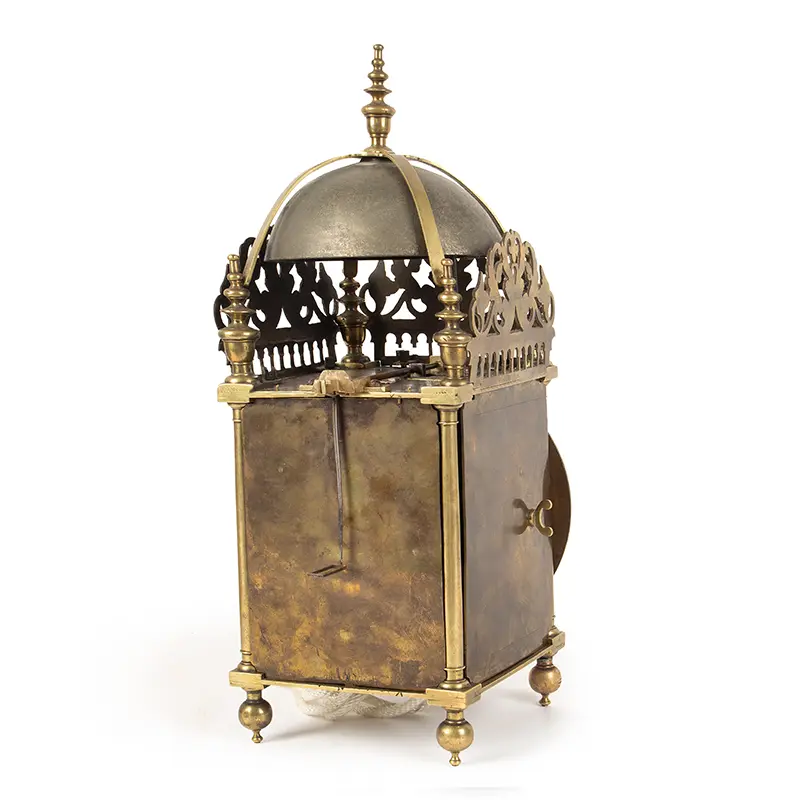
We believe this clock is unique whereas it is an original two handed lantern clock. Most seventeenth century lantern clocks originally had a single hour hand indicating the quarter hour. Many have been converted to two hands over time, but the chapter ring shows quarter hour markings along the inner edge. This clock is a rare, original two handed example with minute markings on the outer edge of the chapter ring. Also, the frets at the upper portion of the clock case are larger [taller] than what is found on most lantern clocks; this example features a pierced gallery along the base. These are rarely seen on earlier lantern clocks. The top finials are also more complex than standard examples.
There are three known original Peter Stretch lantern clocks in addition to this one, according to the definitive book… Stretch: America’s First Family of Clockmakers that speaks to the UK- born Stretch family of clockmakers who emigrated to Philadelphia in 1703 by Donald Fennimore. At least two others known have serious restorations and changes. This is the only known example featuring two hands and larger frets.
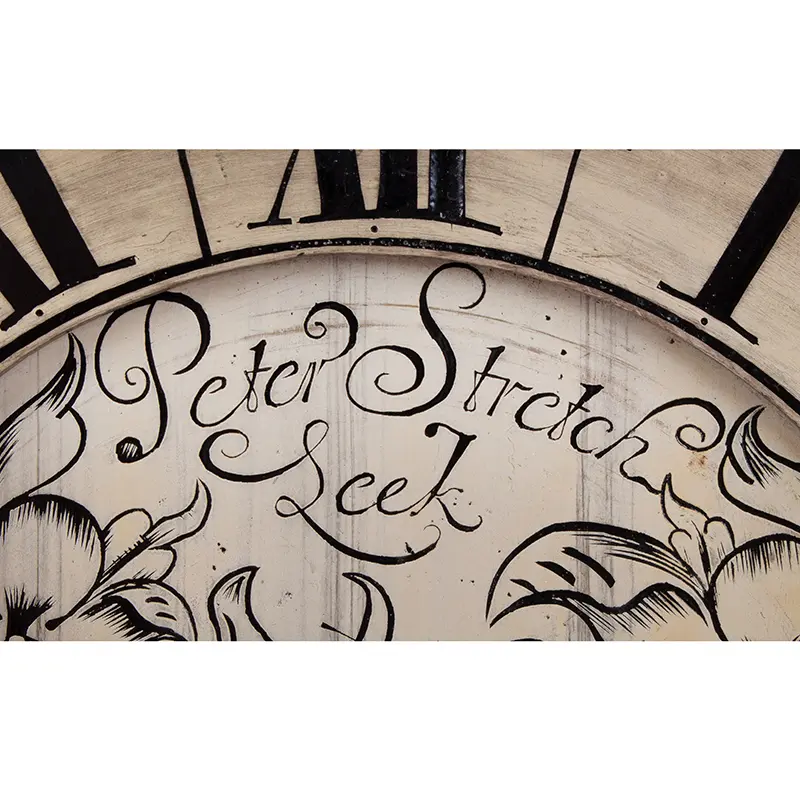
The engraving on each of the known original clocks is consistent with a pot in the lower central dial center from which tulips sprout. The signature Peter Stretch above Leek is also consistent.
It is interesting that while Peter Stretch is known to have made longcase clocks as well as lantern clocks during his short career in England, there are no lantern clocks known by him after he emigrated to Philadelphia. Only 30 hour and 8 day tall clocks were produced, and all were plate frame movements, none of the posted frame, like the lantern clocks, are known to be extant.
Peter Stretch was born in 1670 and was probably trained as a clockmaker by his older brother, Samuel Stretch. He lived and worked in Leek, Staffordshire, England. He likely began his apprenticeship in 1684 at age 14 and completed it seven years later, in 1691. Peter Stretch left Leek in 1703 with his family – traveling to Philadelphia to start a new life. Therefore, this clock was made between 1691 and 1703.
William Penn was granted the land that became Pennsylvania by King Charles ll in 1681, and Penn established it as a religious haven, especially for his fellow Quakers. Peter Stretch and his family were Quakers and left England for the promise of the new world and religious freedom. Peter Stretch became the first, preeminent clockmaker of early Philadelphia. Two of his sons, Thomas and William, trained with him and were next generation clockmakers.
This is a rare and important clock by one of the most important clockmakers [Peter Stretch, just before he emigrated] during the early history of the American colonies.
Item Date: 1684 - 1702
Measurement: 17" high, 6 7/8" maximum width of chapter ring (most lantern clocks are 15" by 6")
Material: Brass and iron
Item Condition: In remarkable, excellent condition. Original escapement. Original side doors. Missing the tip of one of the corner finals.
Price: $29,500
SKU 843-678
For More Information, Please Contact David Hillier at 978-597-8084 or email drh@aaawt.com.