Anonymous, Likely Philadelphia or New Jersey
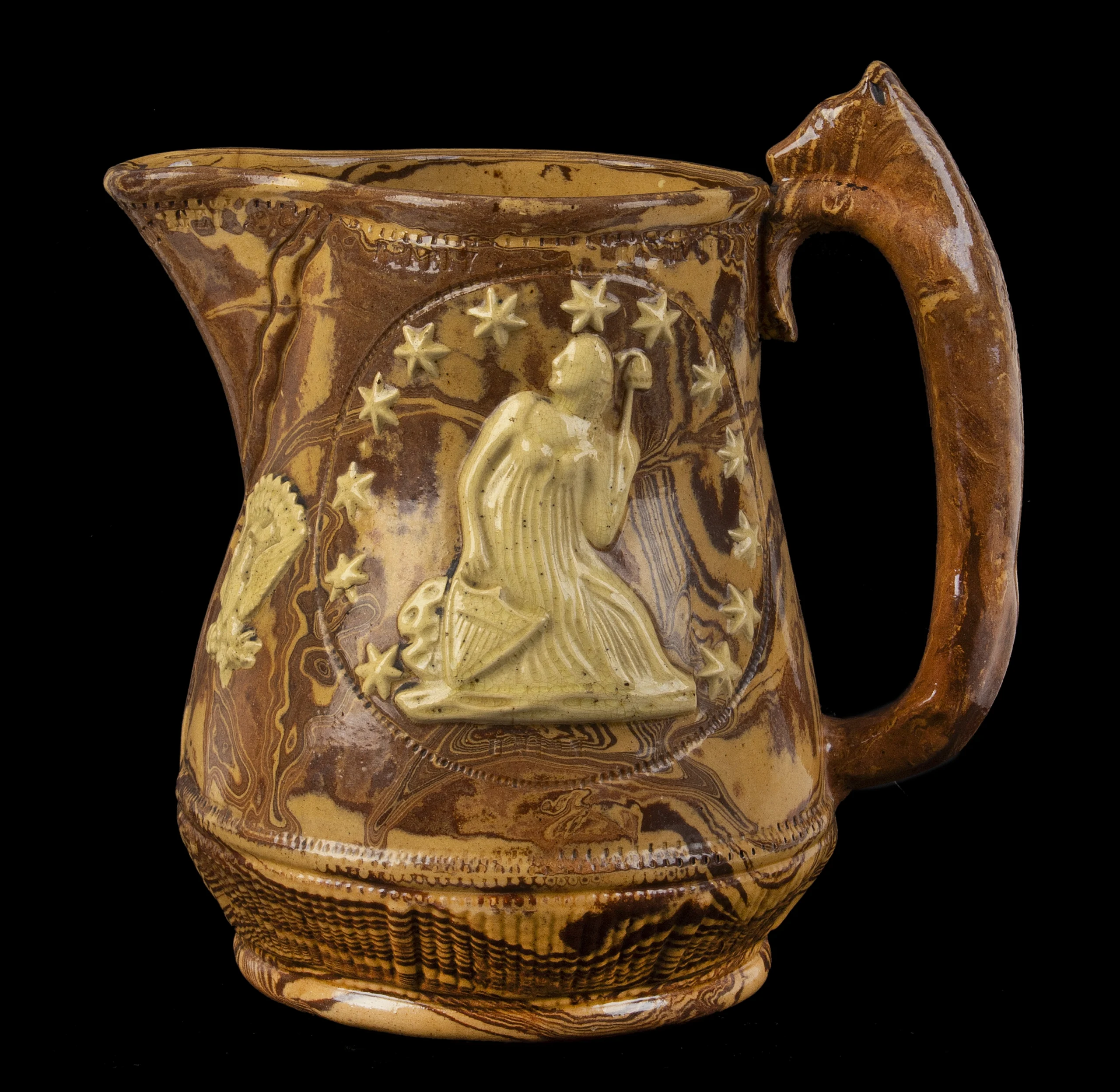
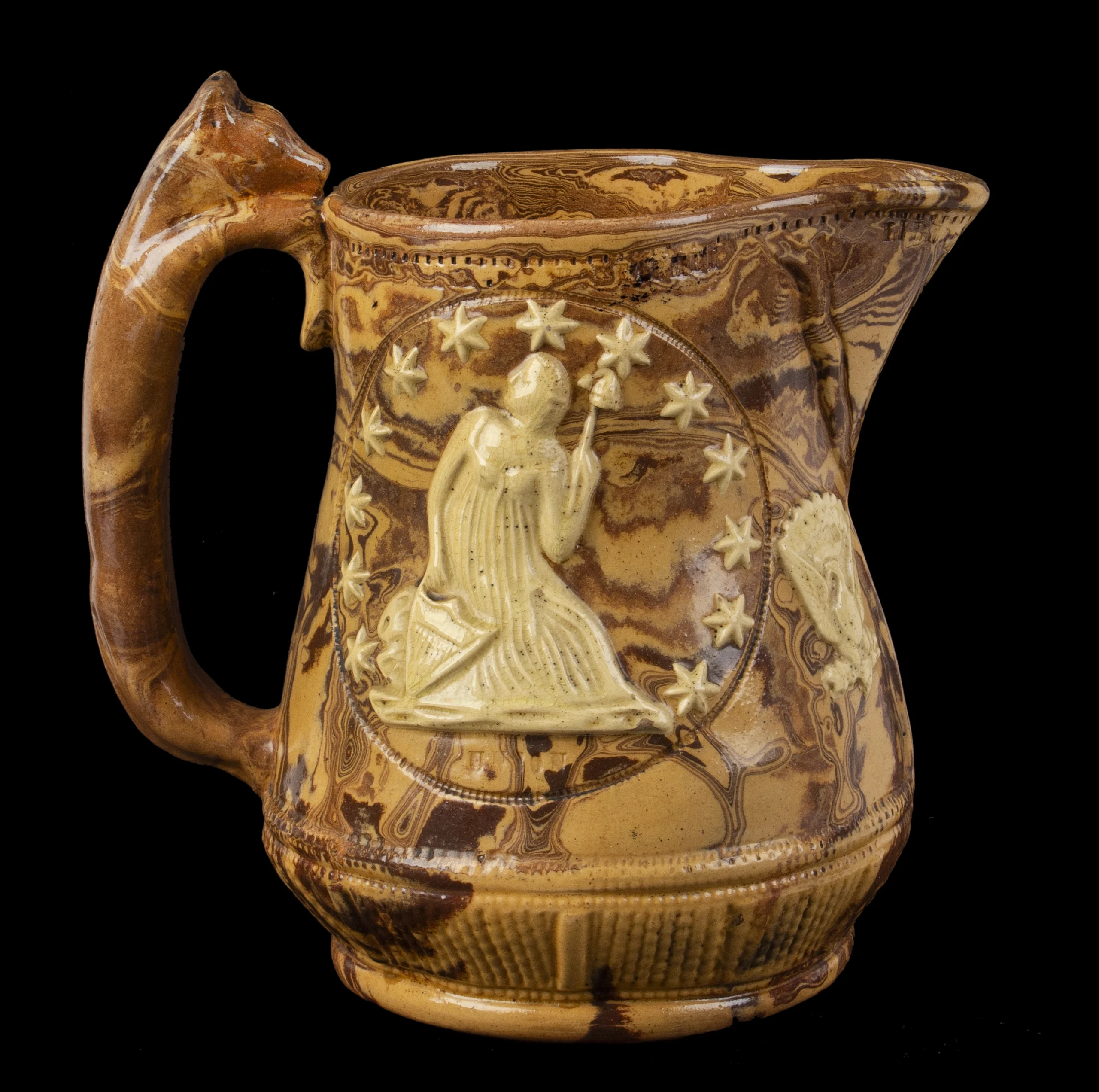
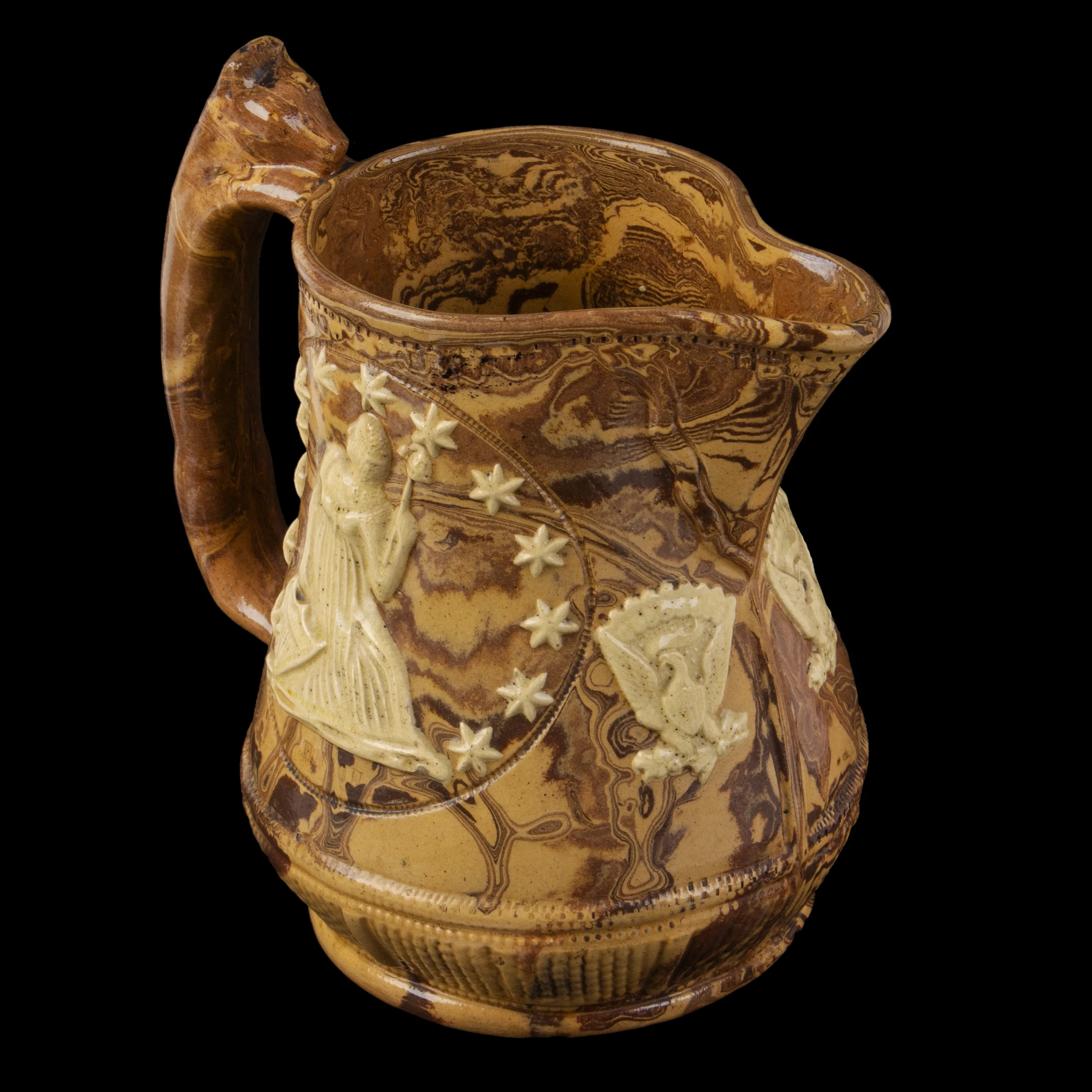
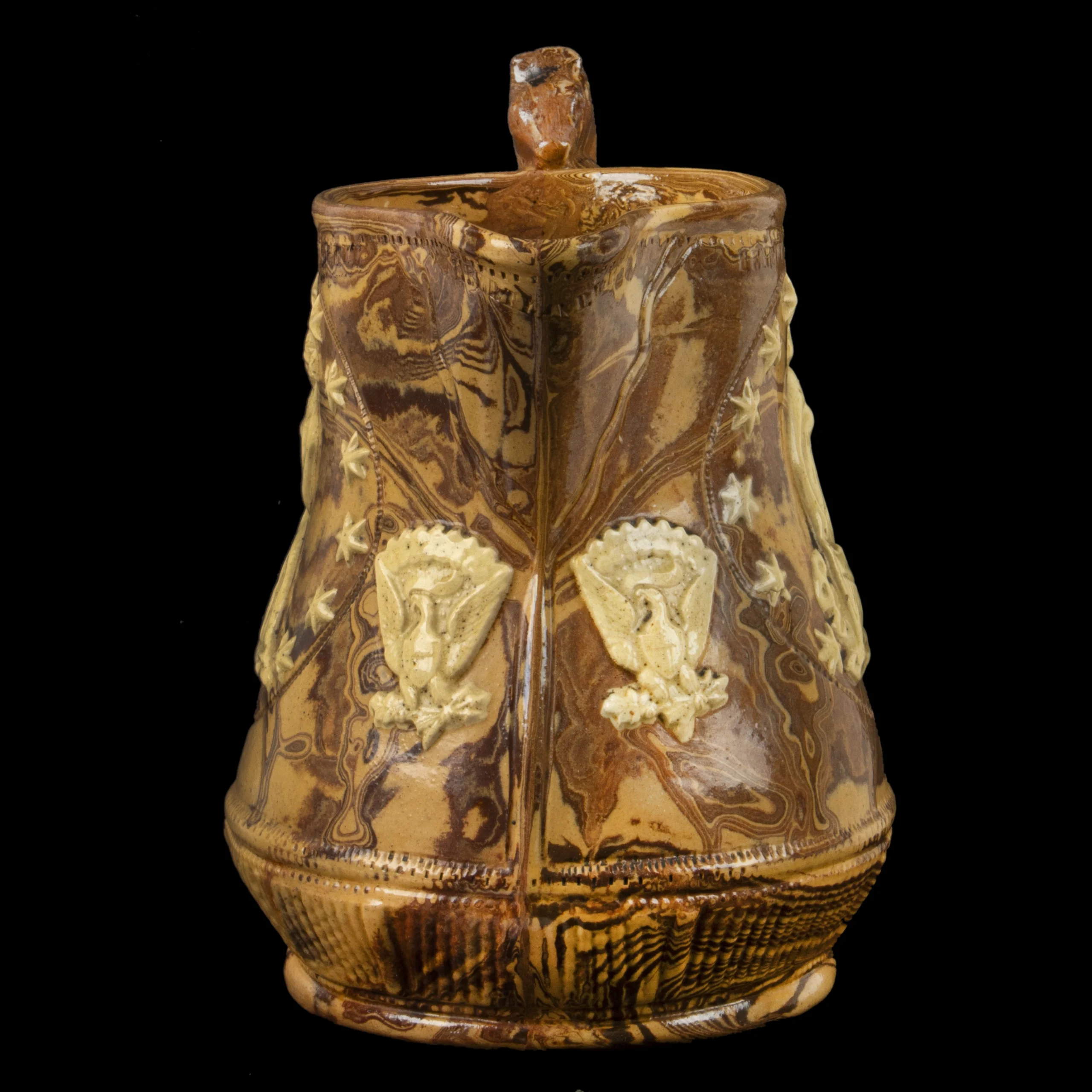
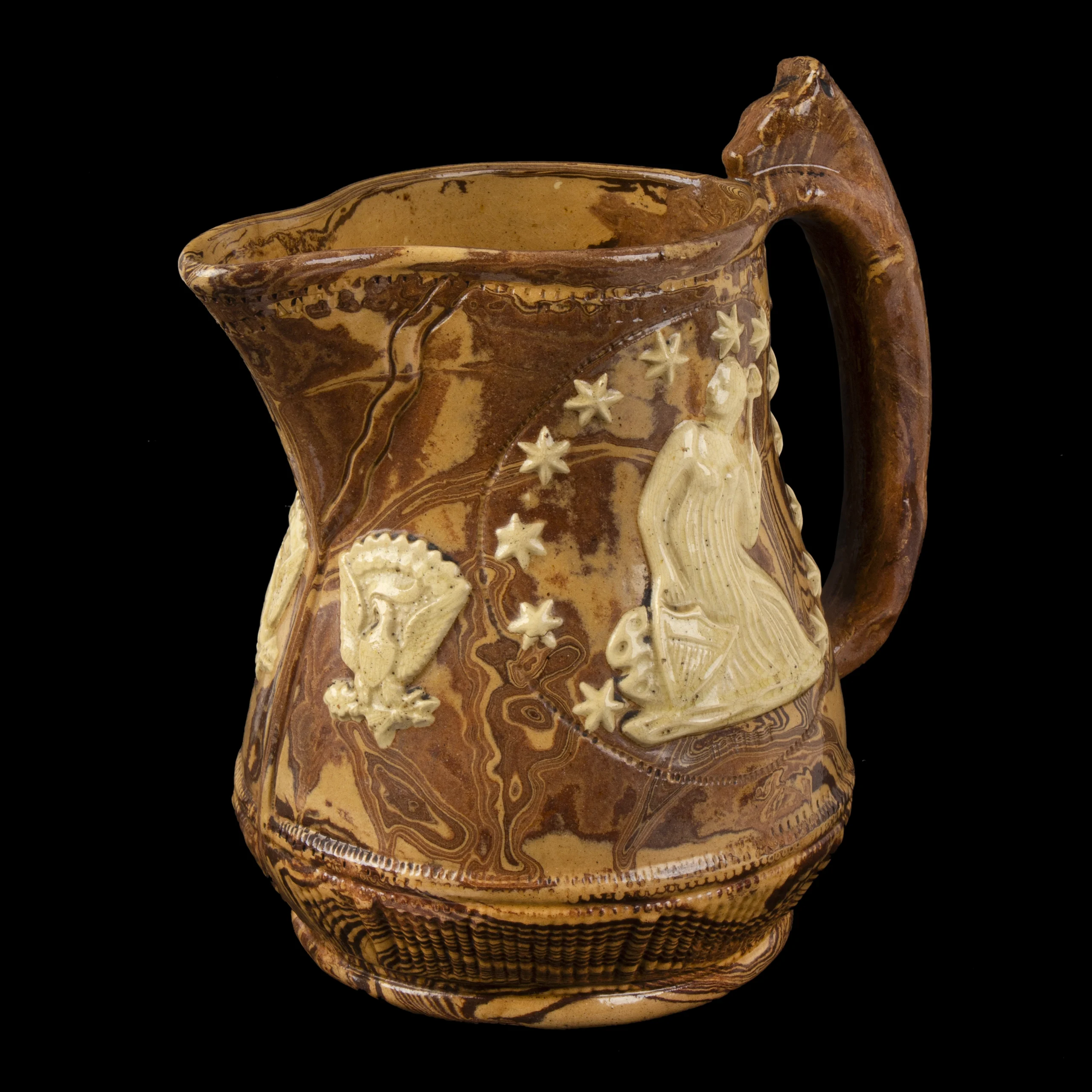
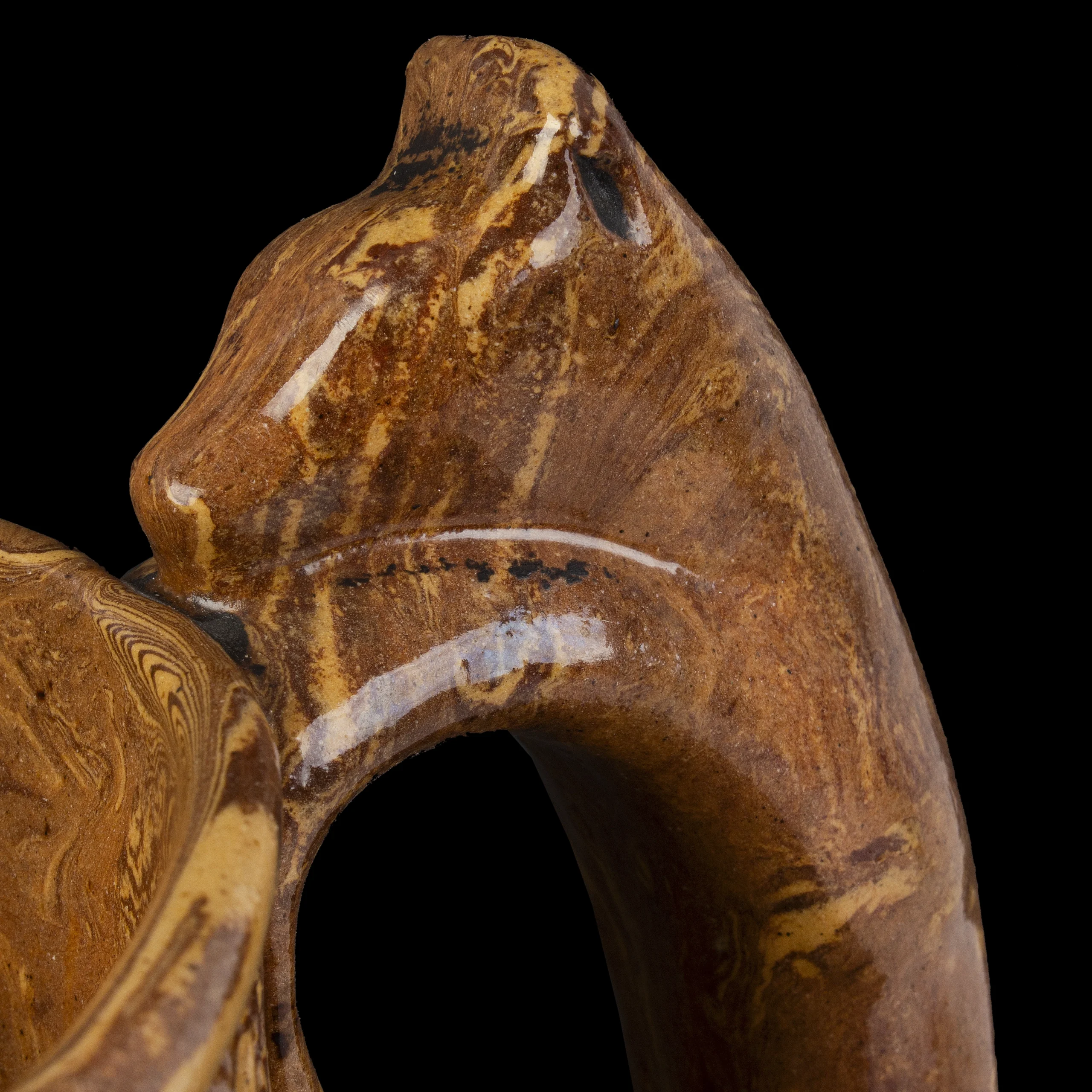
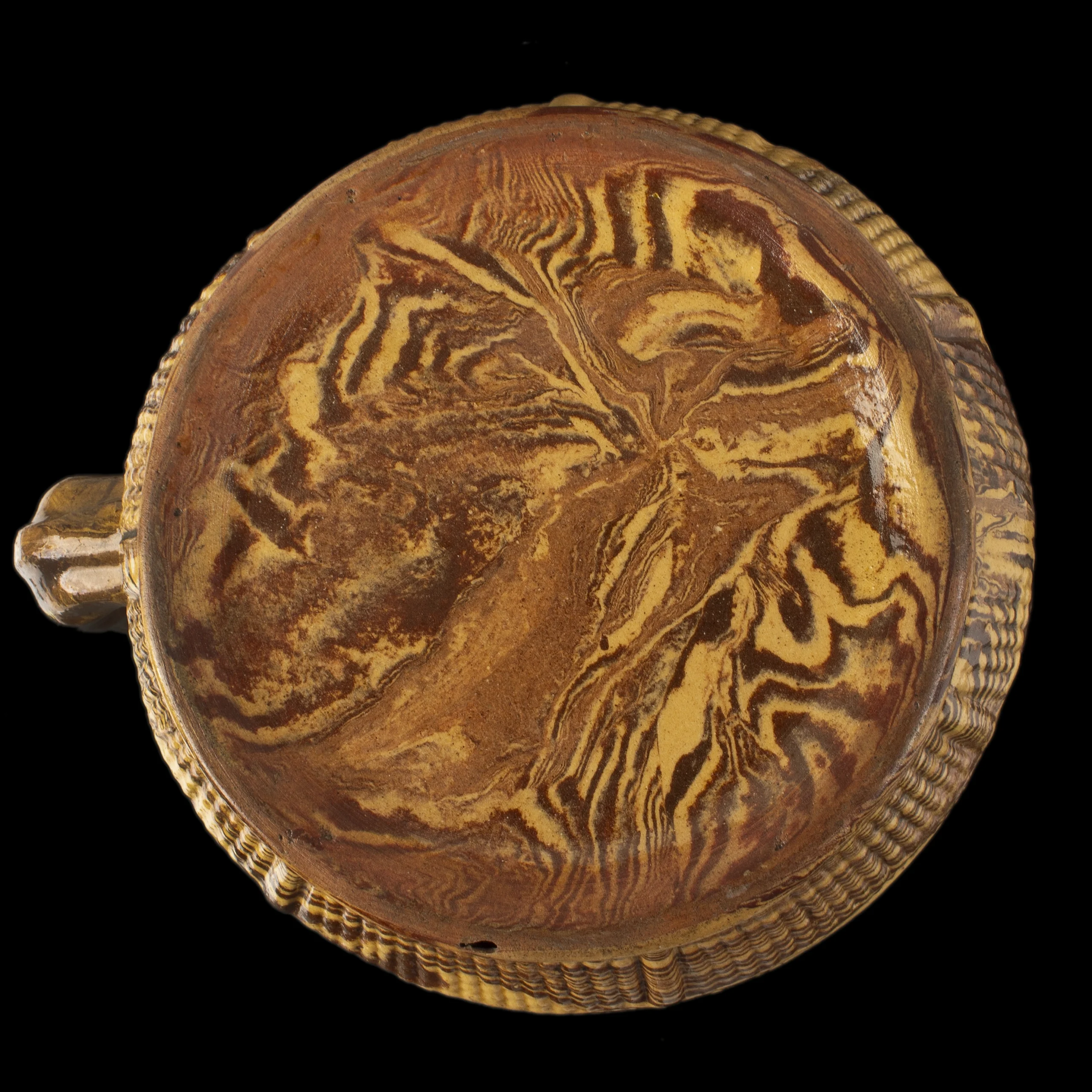
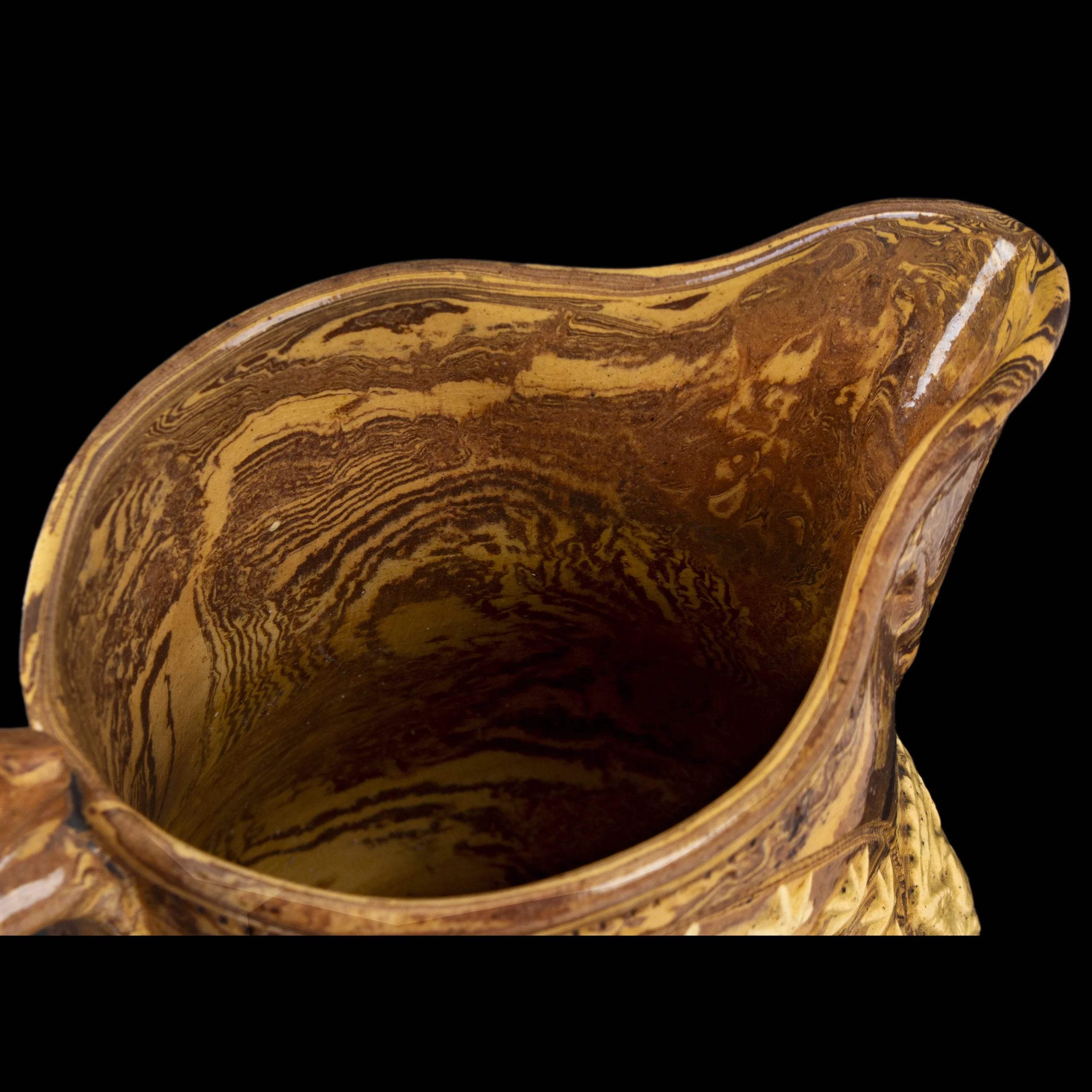
This nineteenth century presentation patriotic hound-handle pitcher is adorned in a striking scroddled appearance, a type of production that is unusual for American potteries, but it did happen in the 1800s. Scroddling is a technique where different colored clays are mottled and swirled into the main clay body to create a mixed or mottled pattern on the surface. The word “scroddle” describes the process of mottling pottery with various colored clays, resulting in a marbled or patterned appearance, sometimes it is a combination of both. Examples of scroddling with American potters happened in Bennington, Vermont, as well as a bank or money box in the form of a bureau reportedly made in Philadelphia in the late nineteenth century that is owned by the Philadelphia Museum of Art.
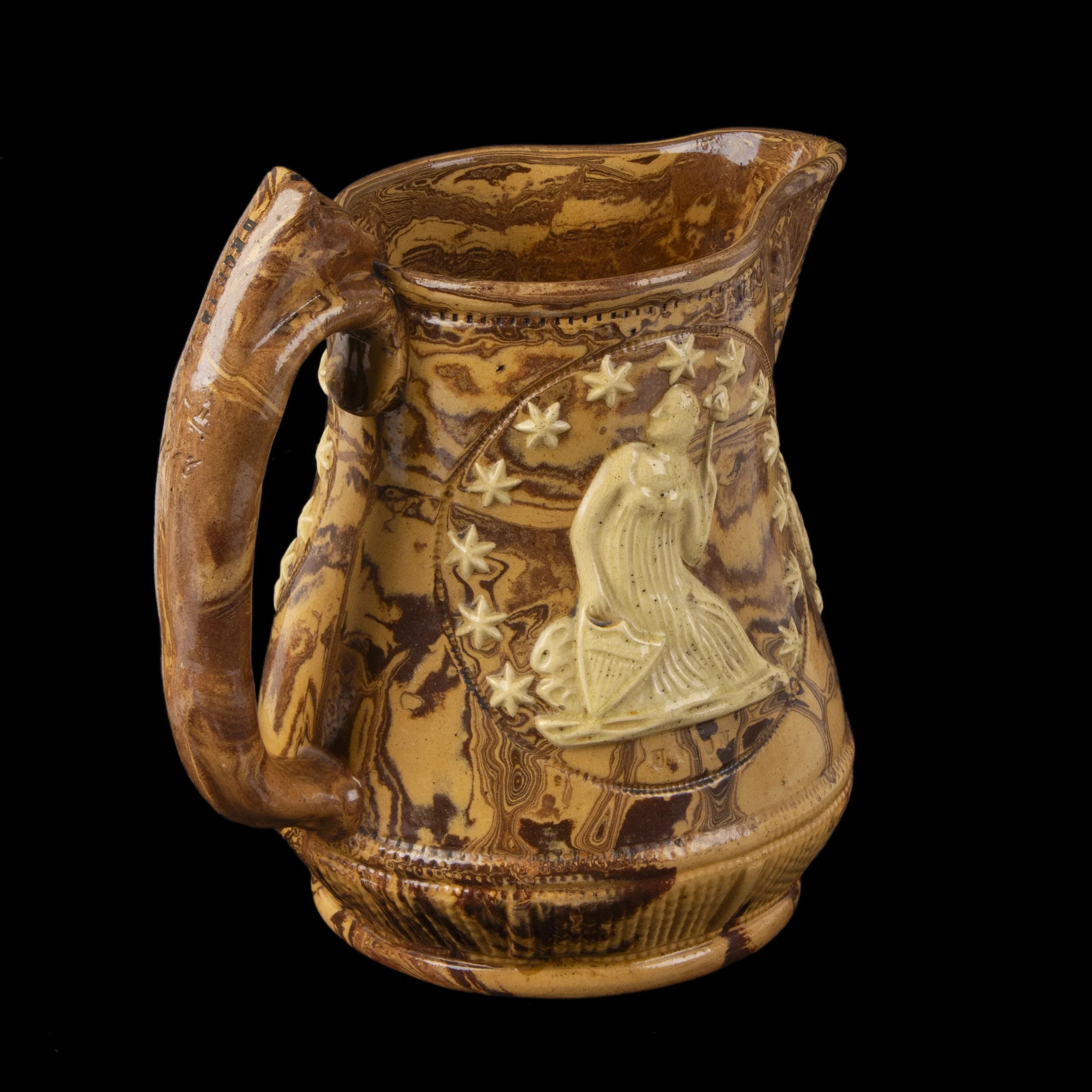
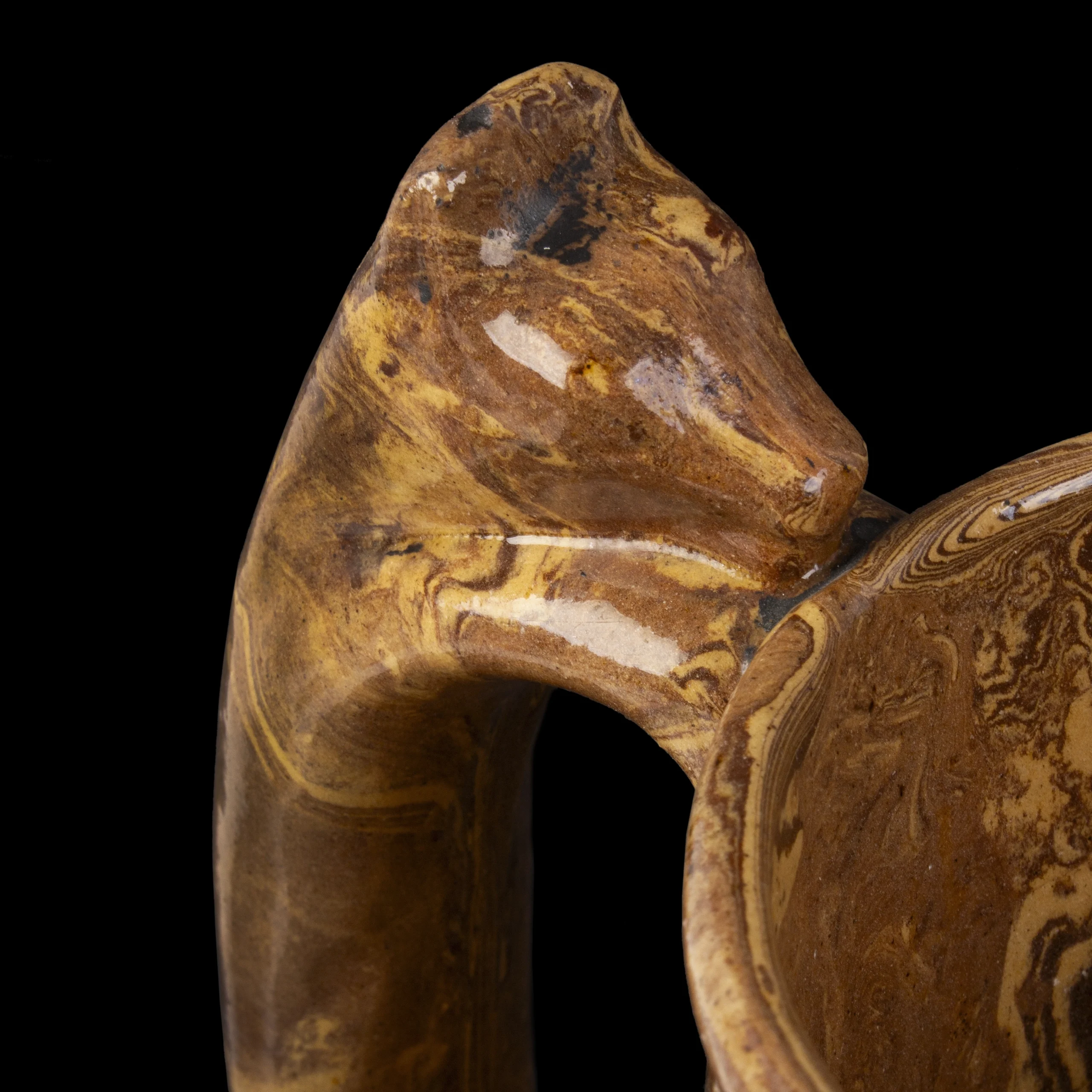
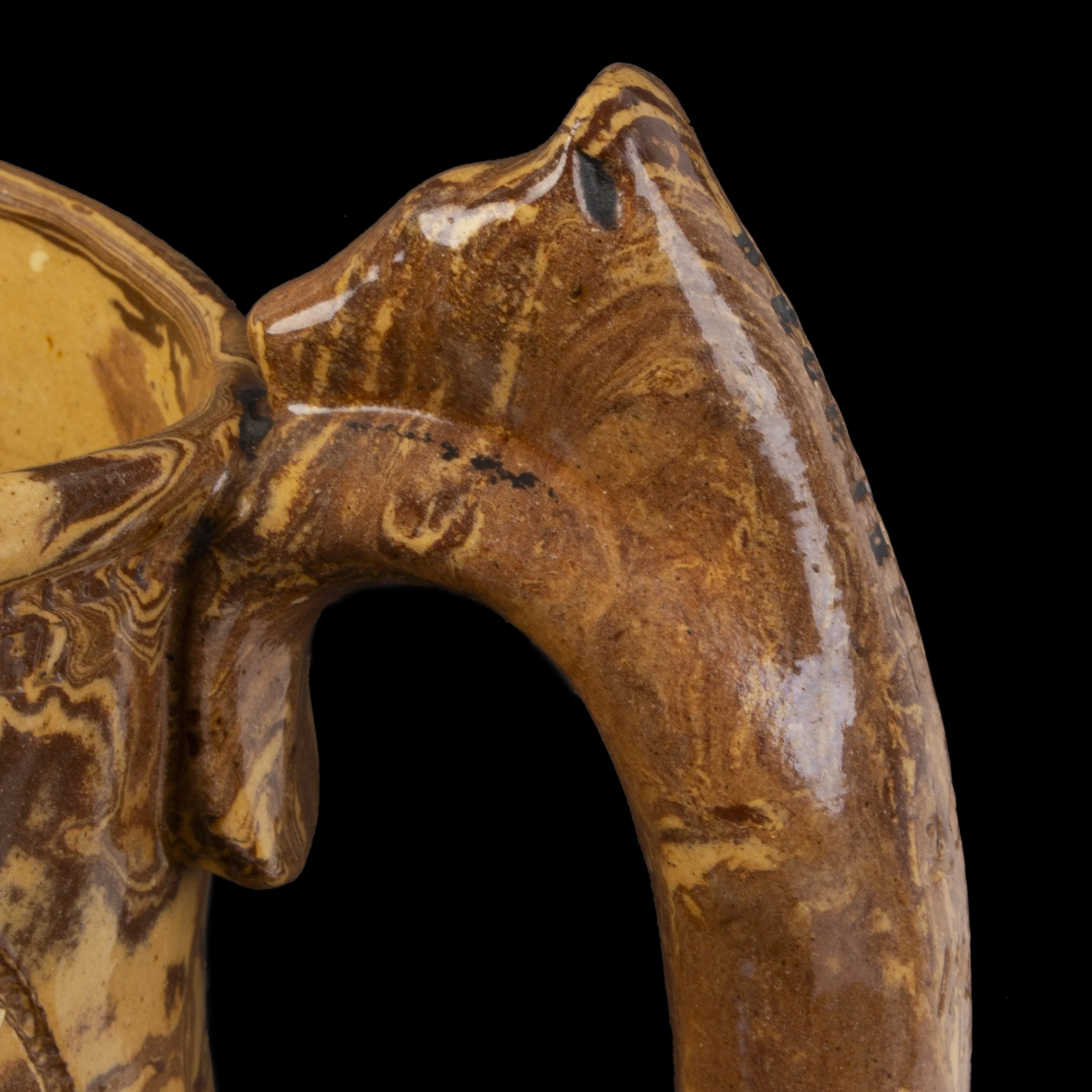
There has been some debate whether the handle on this pitcher portrays a cat or a hound, although it appears in-hand like a hound, differing from some of the more typical hound-handle pitchers made in America, circa 1840s-1870s. The hound-handle pitcher idea was brought to America in the late 1830s by Daniel Greatbach (1810-1881), an English master potter. He worked for a group of American potteries, circa 1838-1860s, although his most famous hound-handle is one that he created for the United States Pottery Company in Bennington, Vermont.
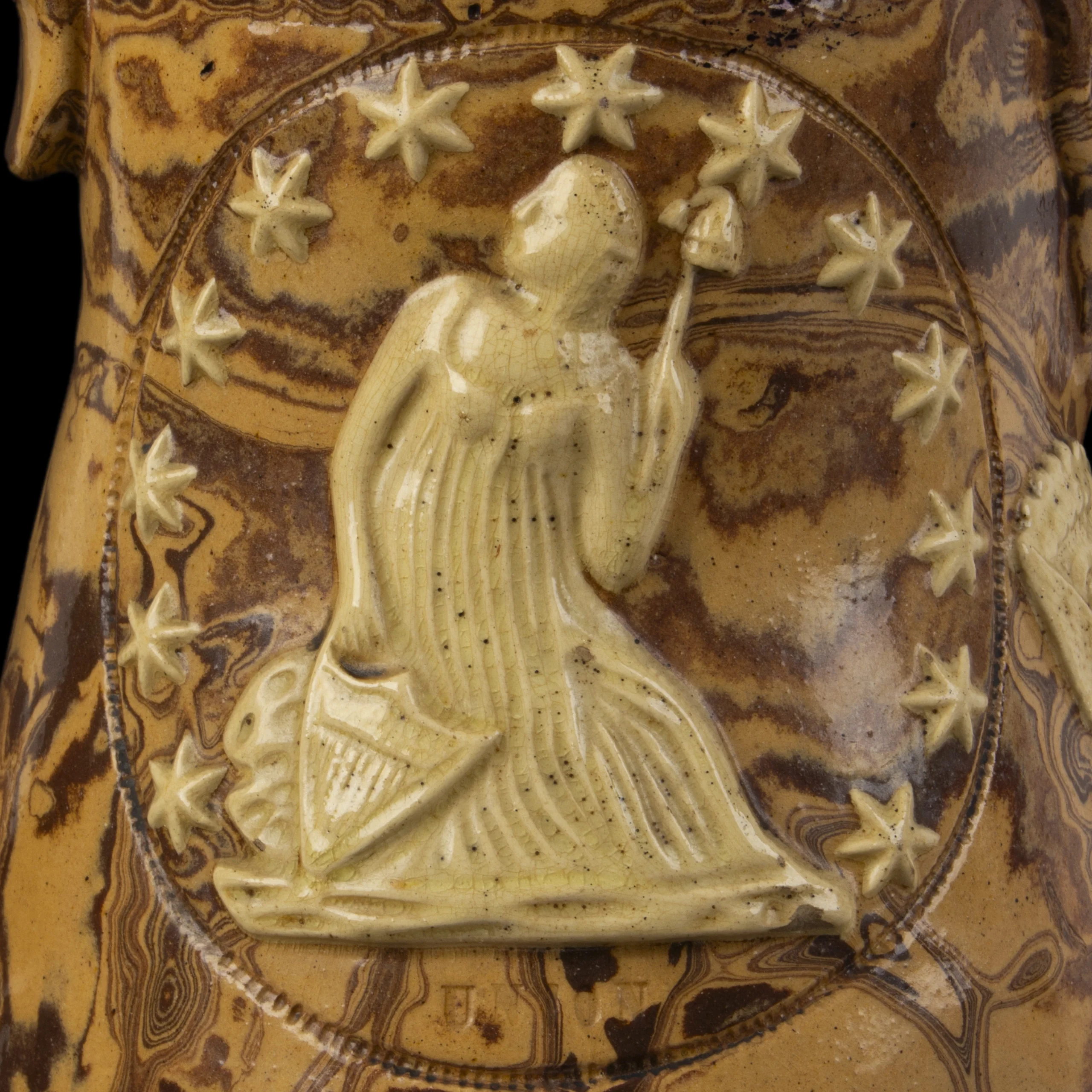
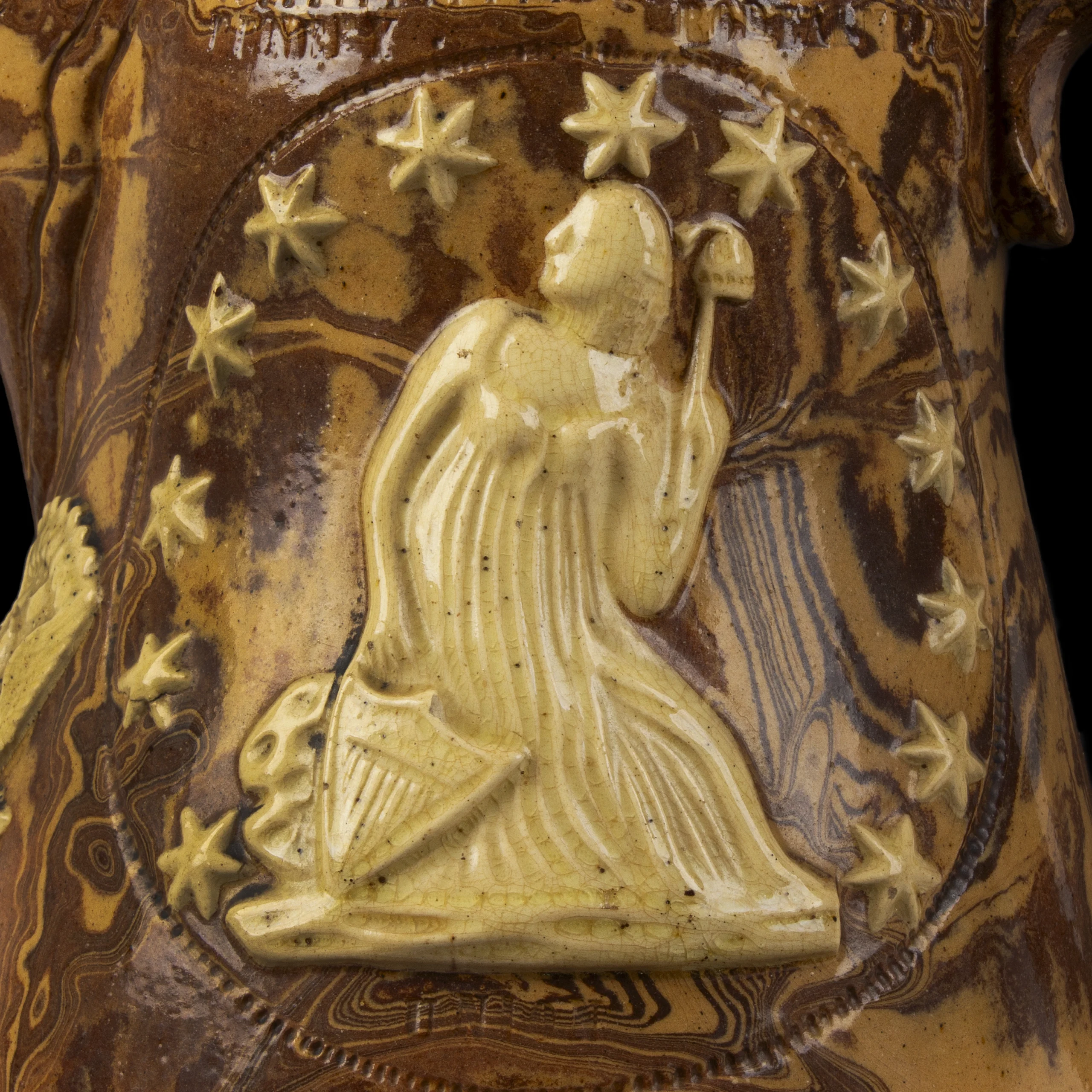
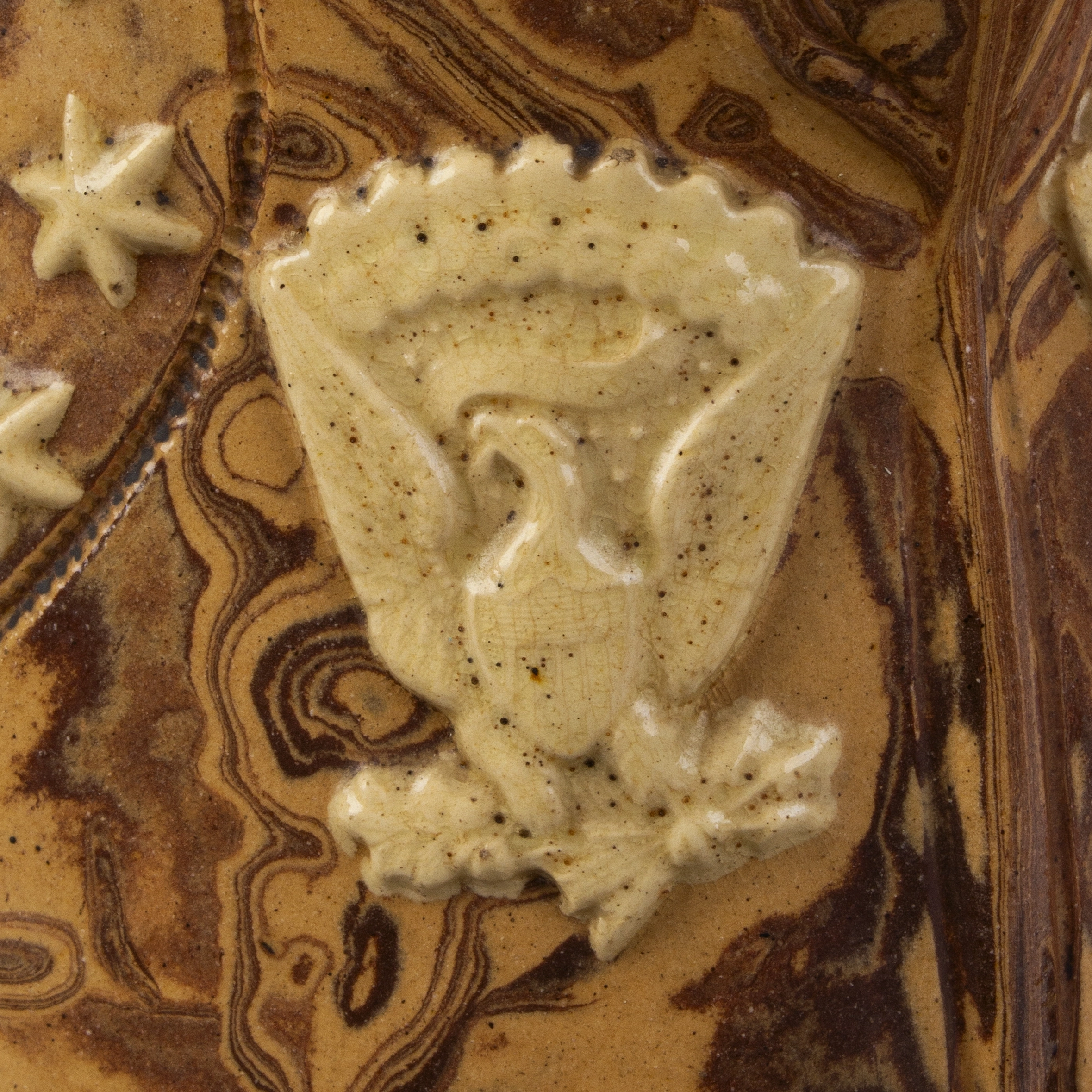
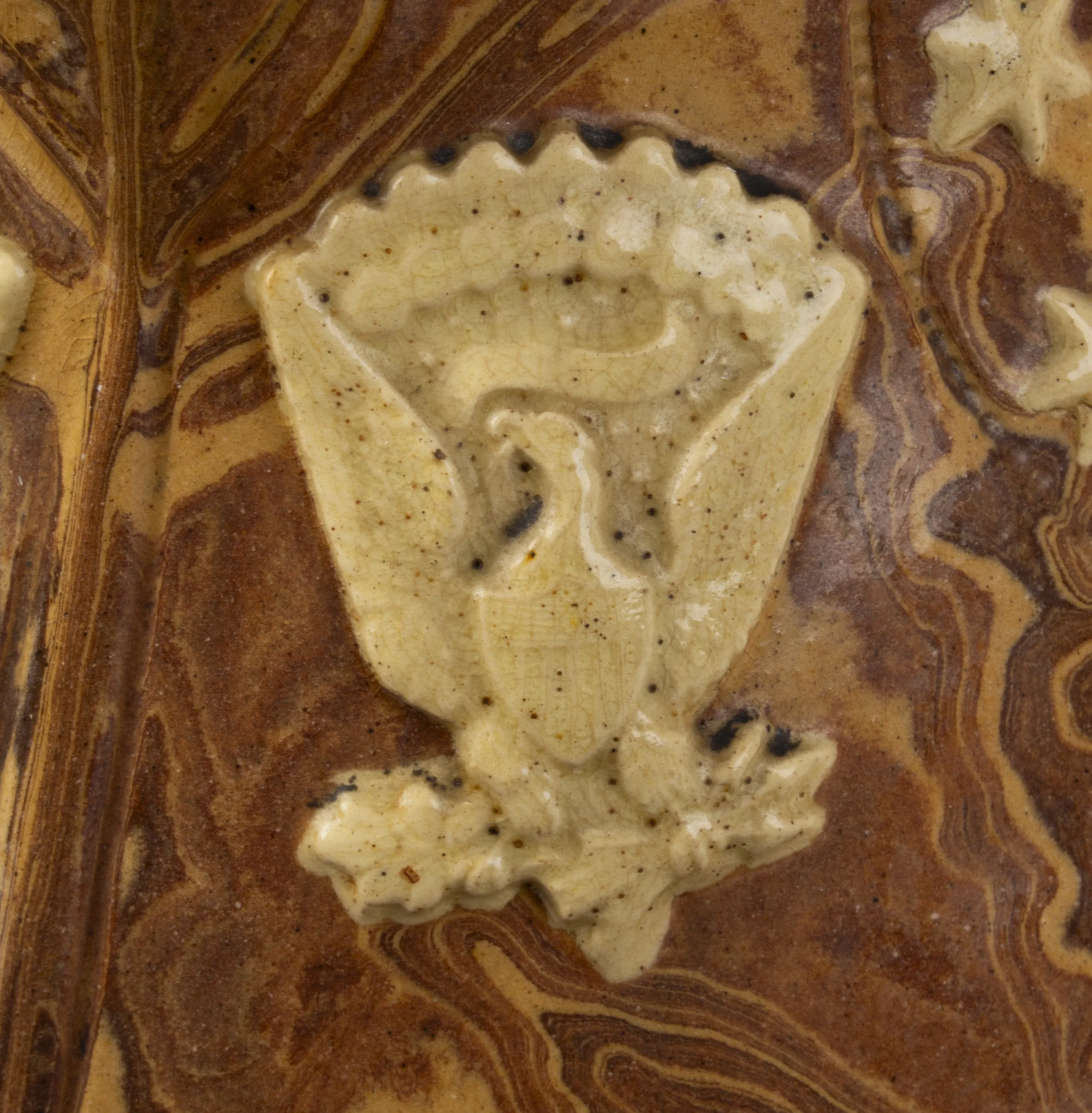
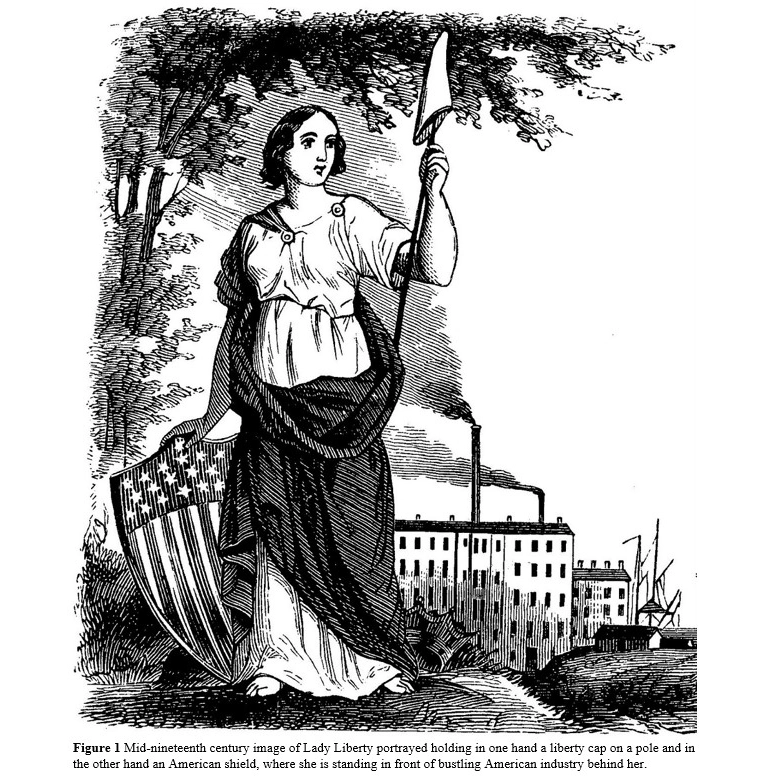
This pitcher is adorned on both sides with applied sprig molds of Lady Liberty, surrounded by thirteen stars, along with two great seals applied on the front of the pitcher. In the nineteenth century, as the country grew and faced new challenges, Lady Liberty changed to reflect the times. The image of Lady Liberty portrayed on this pitcher closely resembles her appearance, as published around the mid-nineteenth century and the few decades that followed, where she is presented holding in one hand a liberty cap on a pole and in the other hand an American shield, while she is standing in front of a bustling American industry behind her (see Figure 1).
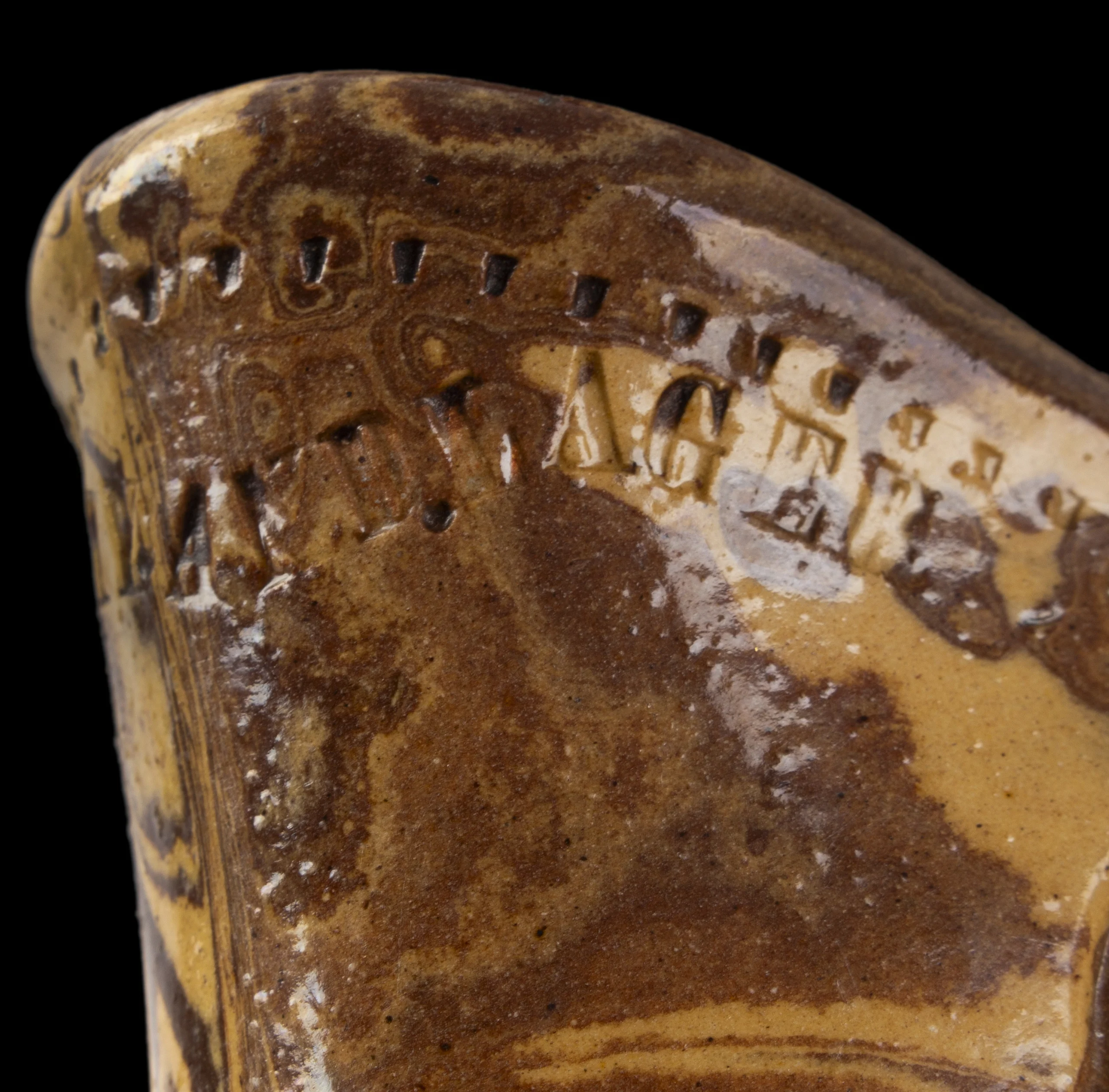
Additionally, the words “Liberty and Lager” are stamped below the rim, which was a briefly used political slogan or rallying cry for anti-Prohibition agitators during the 1868 presidential election, seemingly used primarily by the Democratic party pandering to the large German immigrant population in Northern cities endeavoring to solicit votes. The election was contested by Republican Ulysses S. Grant and Democrat Horatio Seymour. However, it did not work, Grant won the election becoming the 18th President of the United States. But the “don’t take away our beer!” sentiment was strong and may have remained an issue in the politics of northern cities.
It was also published in a book in 1926 written by Dartmouth College history professor John Gerow Gazley (1895-1991), titled, American Opinion of German Unification, 1848-1871: “As early as 1862, the German Americans began to be dissatisfied with the Republican party. One cause for German dissatisfaction was the gradual increase of power within the Republican party of the old Whig elements which the Germans so disliked. It is certainly true that to a large extent the Republican party came under the control of big business. More important still was the return to power of the Puritan elements. A good example is furnished by the Excise Law of 1866 in New York, which forbade the sale of all intoxicating liquors on Sunday. The New York Tribune claimed that the Excise Law had cost the Republican party five thousand German votes in the election of 1866. The New York Times and Nation felt that the Republicans had made a serious blunder, and blamed the more puritanical papers like the Tribune. Charles Dawson Shanley (1811-1875) in the Atlantic Monthly described the conditions early in 1867 when he said: “’Liberty and Lager-Bier!’ are vibrating upon the air in guttural German accents.” In 1868 the New York Times reported a meeting of Germans in the Bowery to protest the law. The issue was still a live one in 1870 and played an important part in the campaign of that year along with the Franco-German War.”
During the nineteenth century, particularly around 1868, Philadelphia’s brewing industry also underwent a revolution driven largely by German immigrants and the growing popularity of lager beer. This period saw a significant increase in the number of breweries in the city, with Philadelphia becoming a major center for beer production.
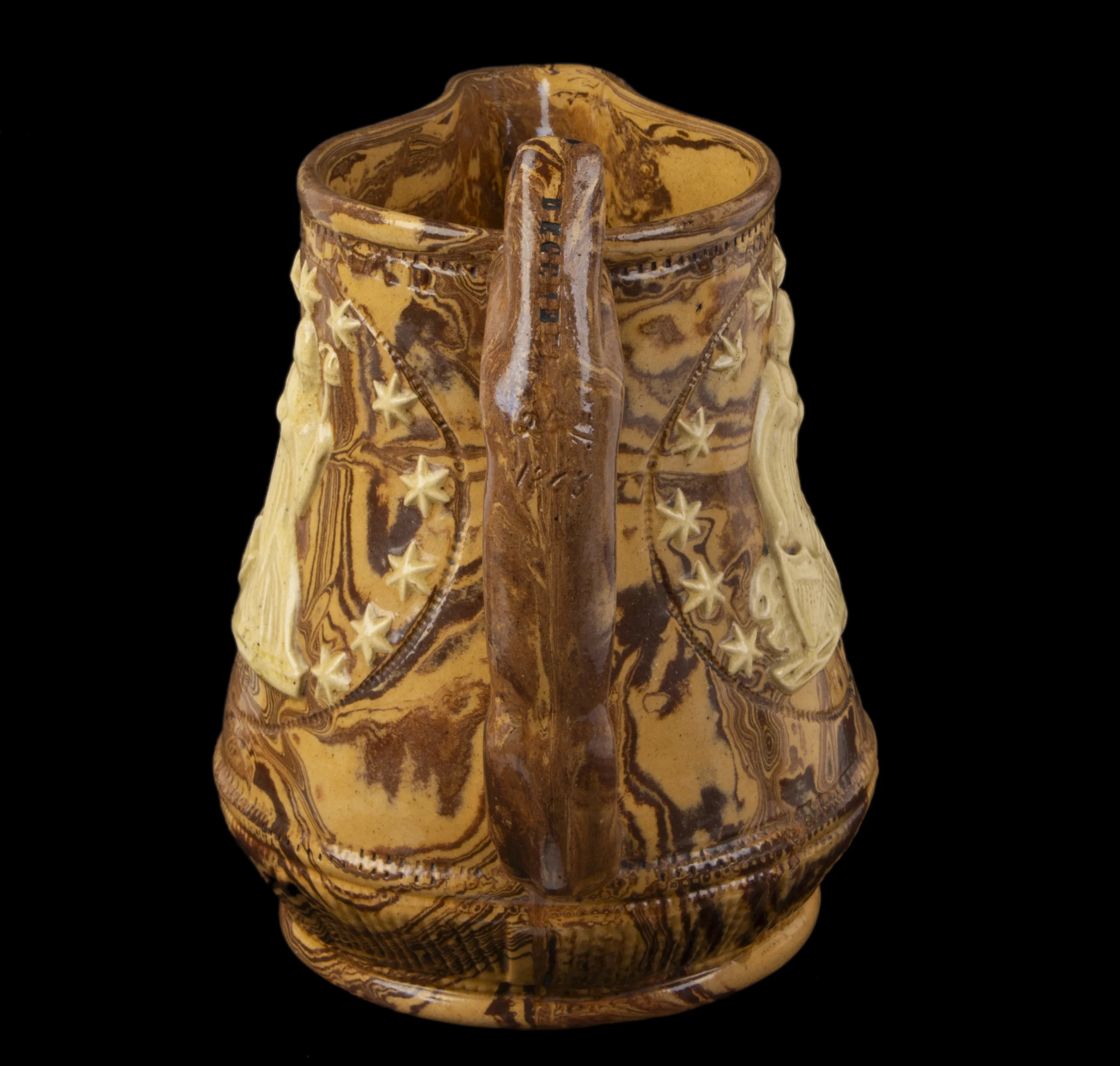
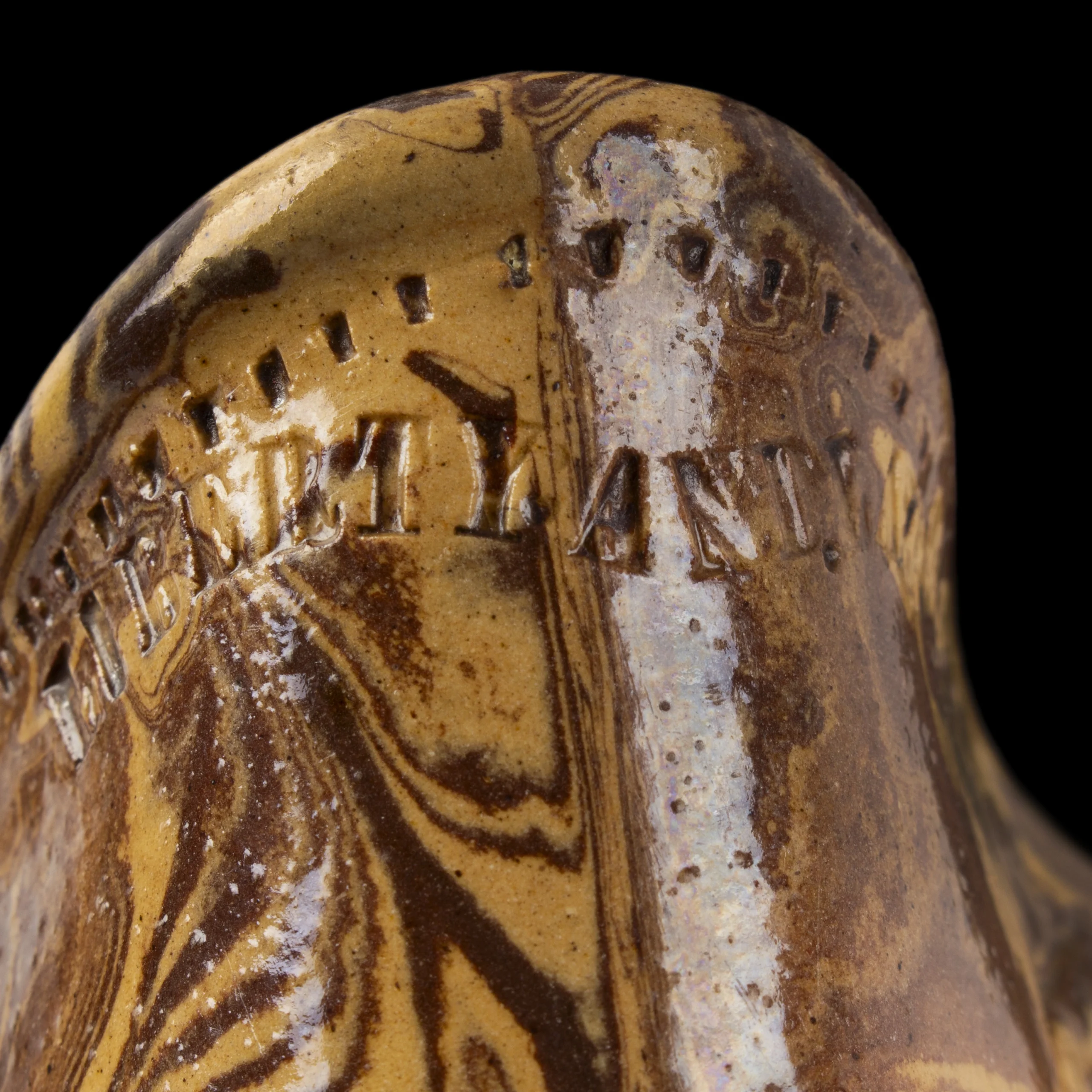
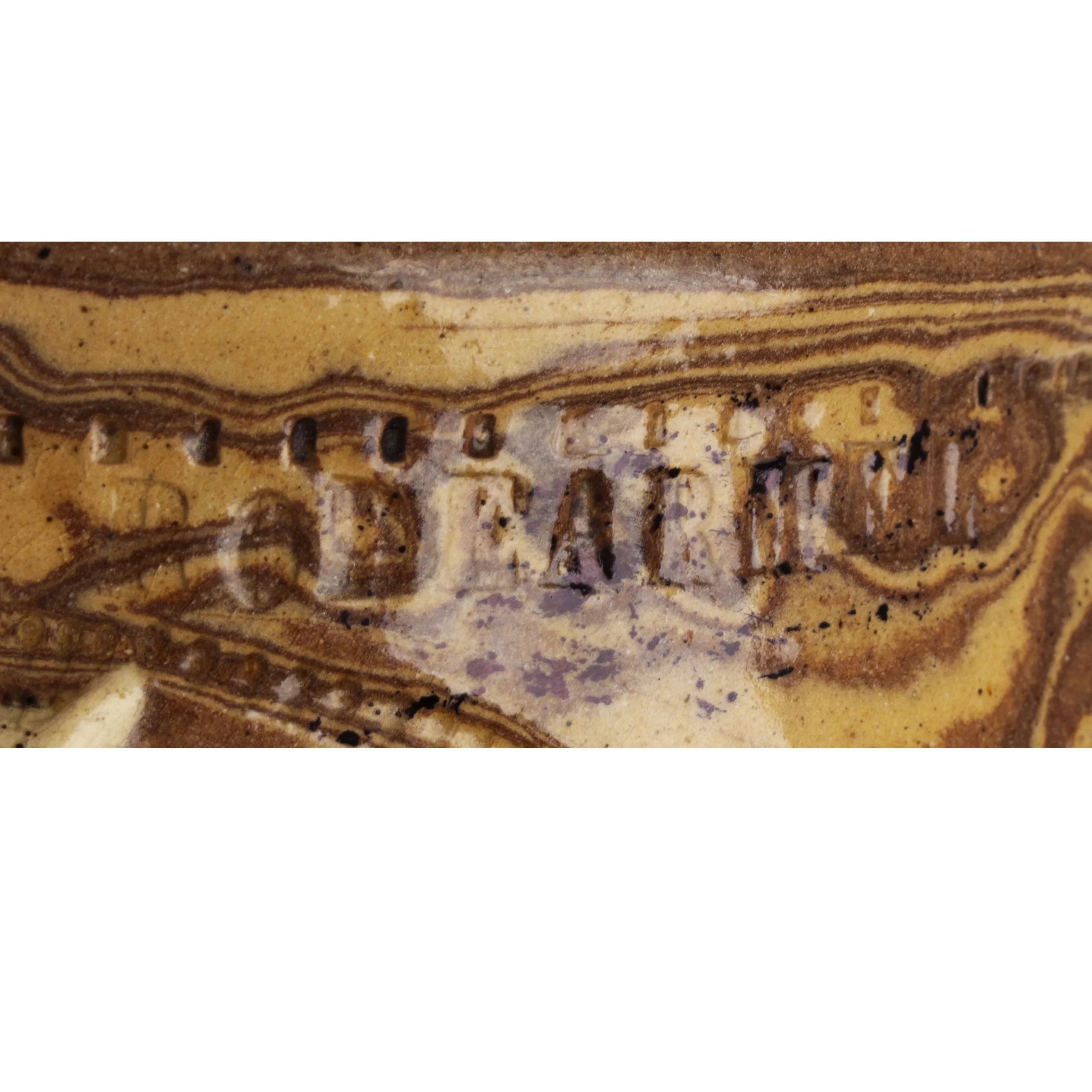
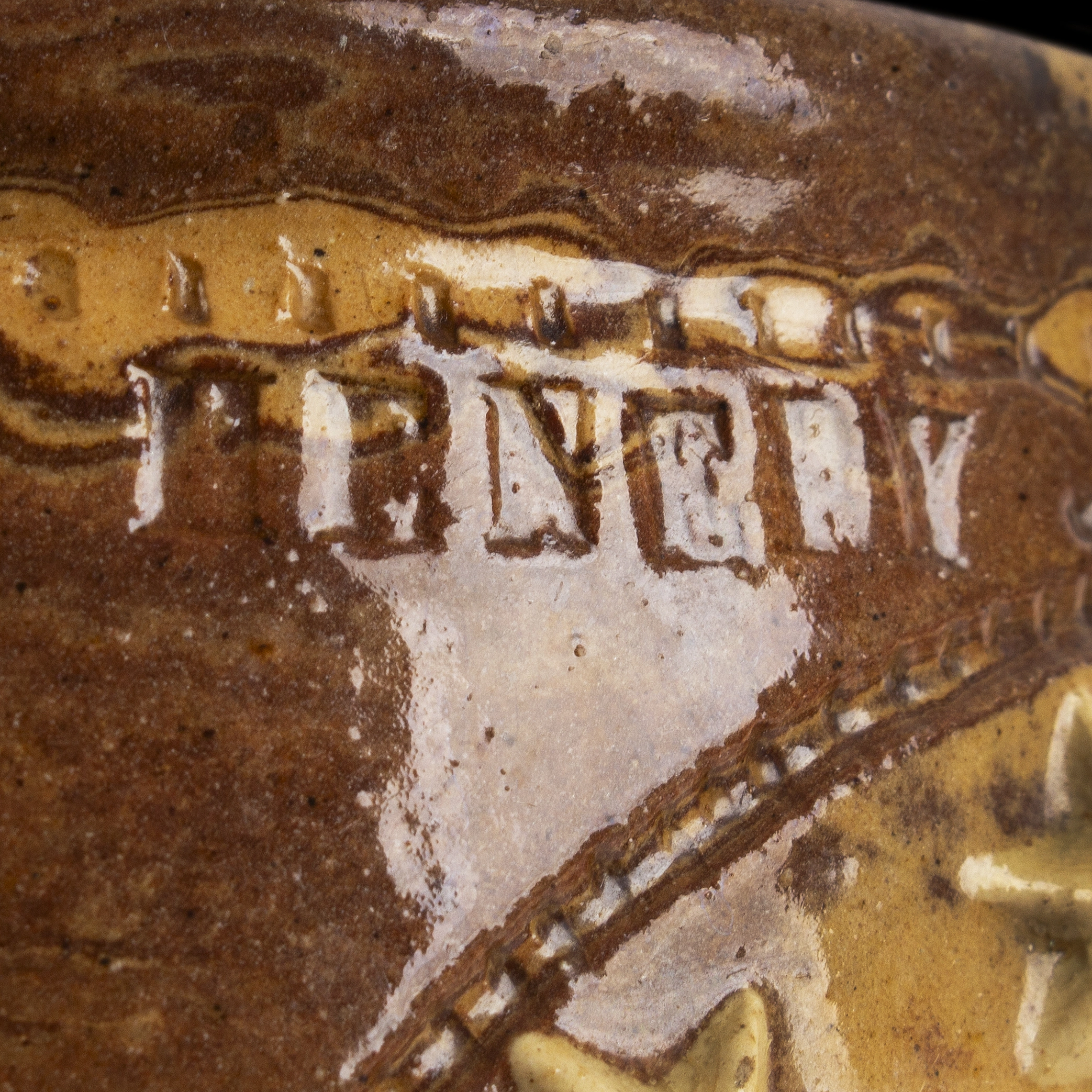
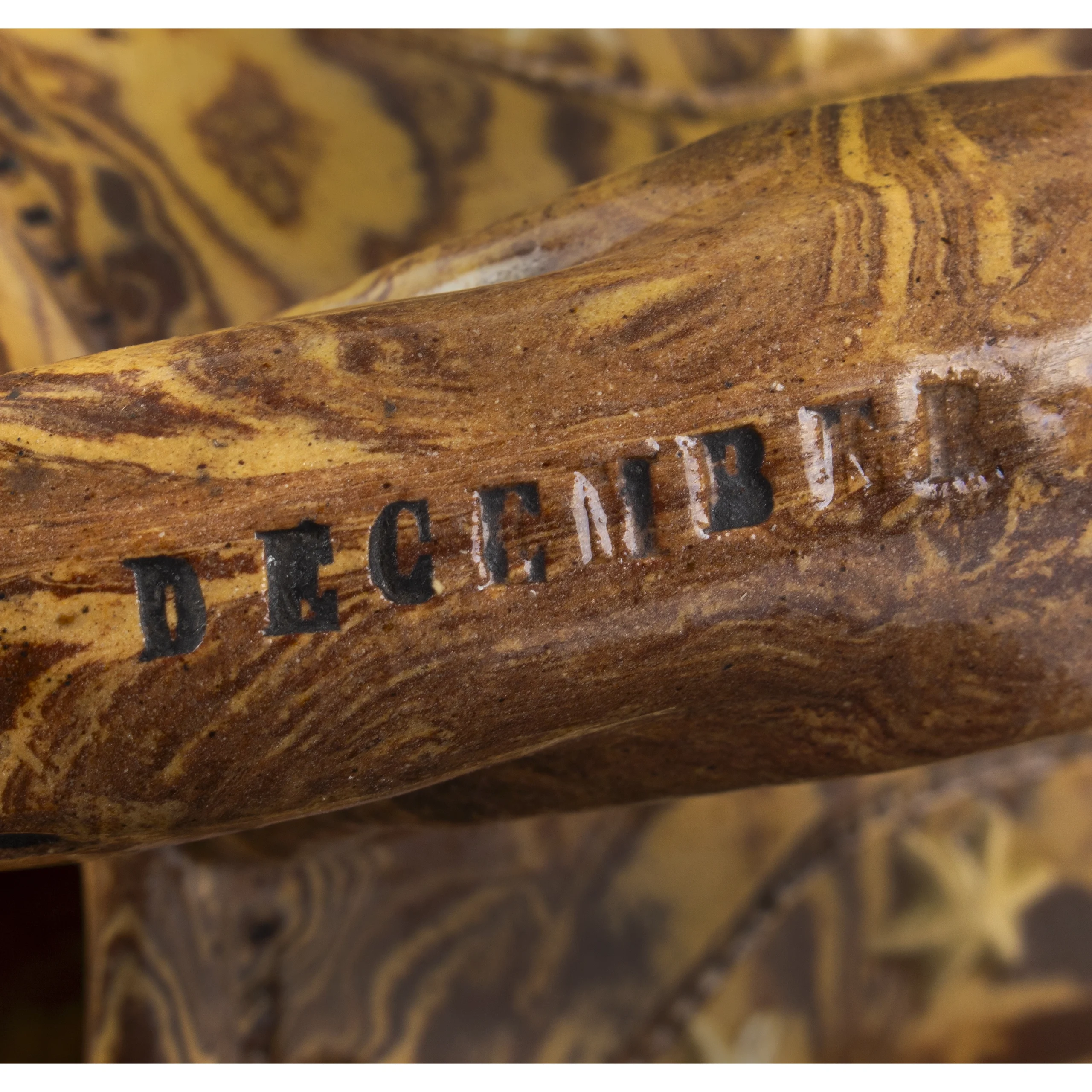
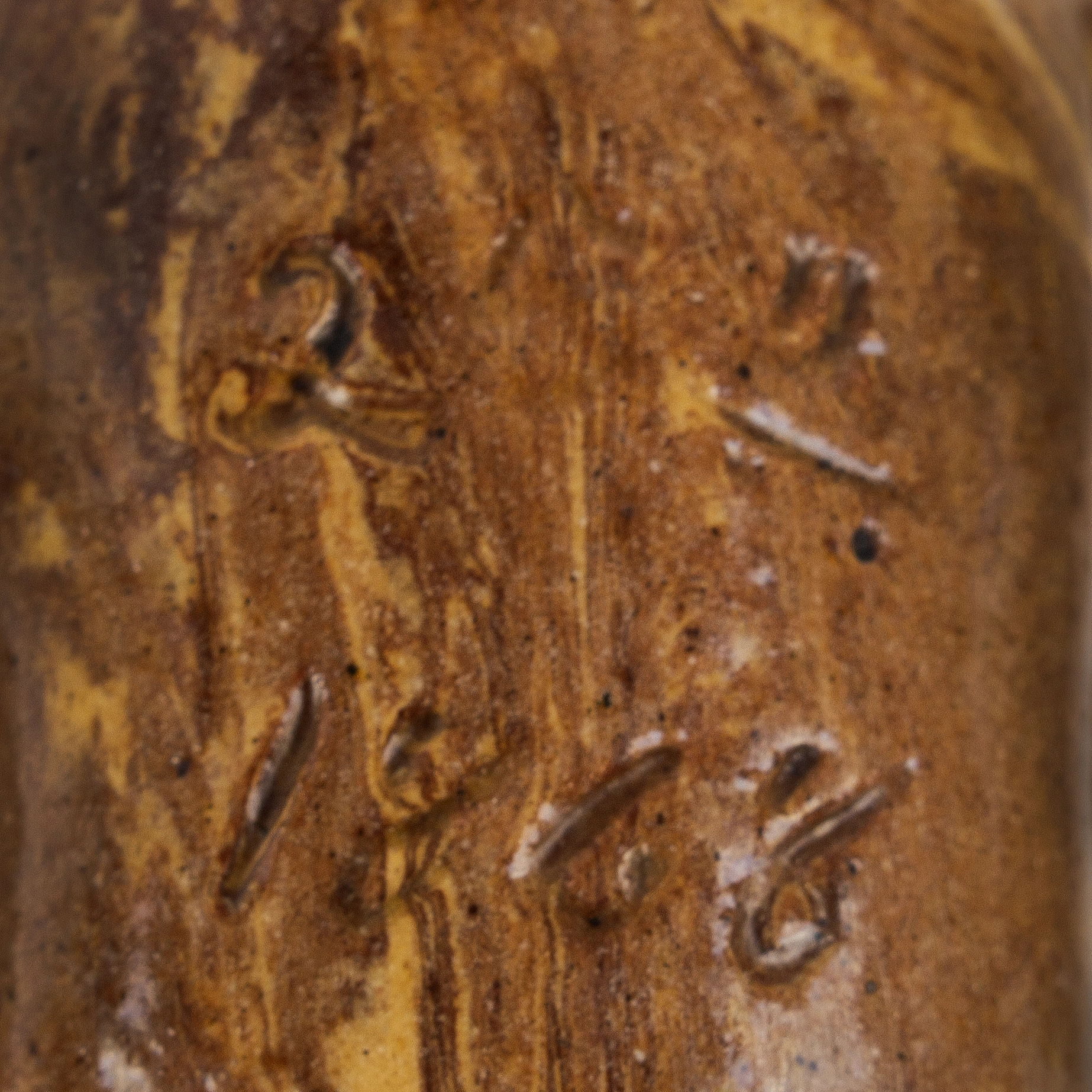
Furthermore, this pitcher is adorned on both sides above Lady Liberty and along the rim with the impressed name of “HENRY RODEARMEL.” This likely represents Henry Rodearmel (1816-1890) who was born in Philadelphia in 1816 and died in Philadelphia on September 10, 1890. The handle of the pitcher is impressed “DECEMBER” and inscribed “25th 1868,” suggesting this was a presentation pitcher given as a Christmas present.
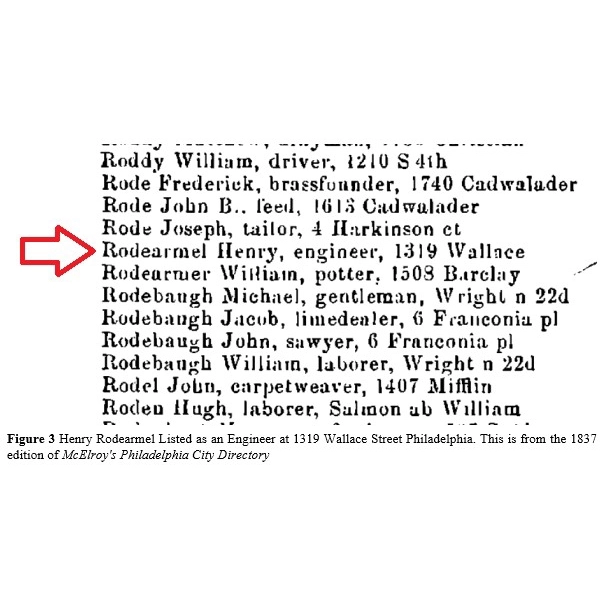
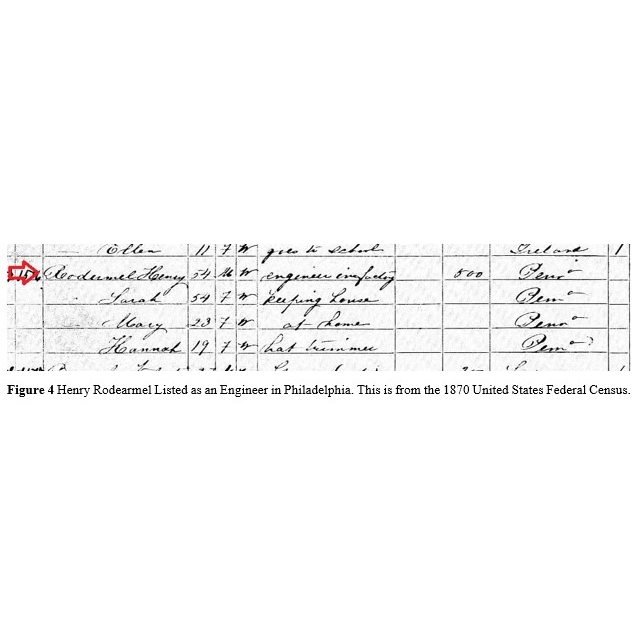
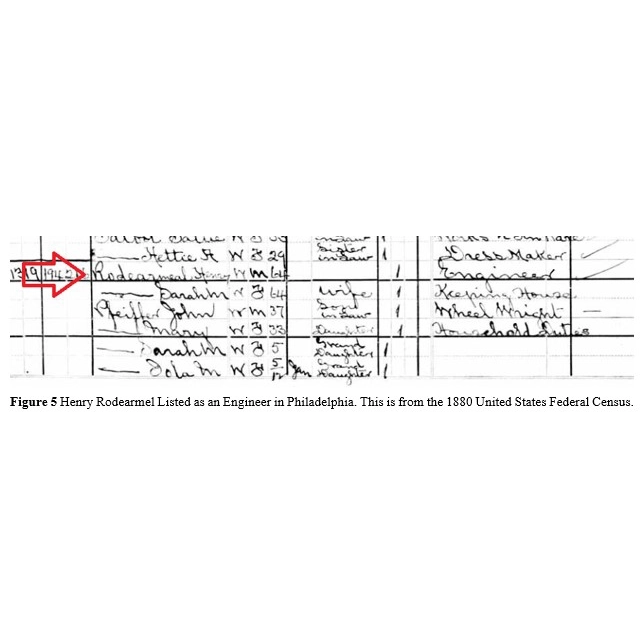
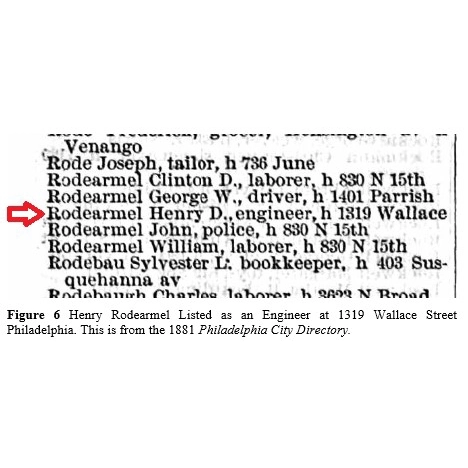
Rodearmel seems to have been a career engineer, whereas he is listed with this occupation, as early as the 1837 edition of McElroy’s Philadelphia City Directory at 1319 Wallace Street (Figure 3). He is then cited as an engineer in the 1870 and 1880 United States Federal Censuses in Philadelphia (Figures 5-5). The 1881 Philadelphia City Directory also lists him as an engineer, where he is still working at 1319 Wallace Street (Figure 6).
Among the engineering projects he was involved with was one cited in the 1860 issue of Laws of the General Assembly of the Commonwealth of Pennsylvania: “Section 1. Be it enacted by the Senate and House of Representatives of the Commonwealth of Pennsylvania in General Assembly met, and it is hereby enacted by the authority of the same, That the auditor general, state treasurer and attorney general be and they are hereby authorized and required to examine into the claim of the sureties of Henry D. Rodearmel, late supervisor (in this case the use of the word “late” likely signifies that Rodearmel was no longer employed or had left that position) on the Susquehanna division of the Pennsylvania canal, and they, or a majority of them, to report to the legislature, at their next session, whether anything is justly and equitably due said sureties from the commonwealth; and if anything is so due, the nature and amount thereof.”
The Rodearmel family is a Philadelphia name with roots tracing back to Germany. The family name first appeared in Philadelphia in the eighteenth century, where the surname is also spelled in historical records as Rothermel and Roadarmel.
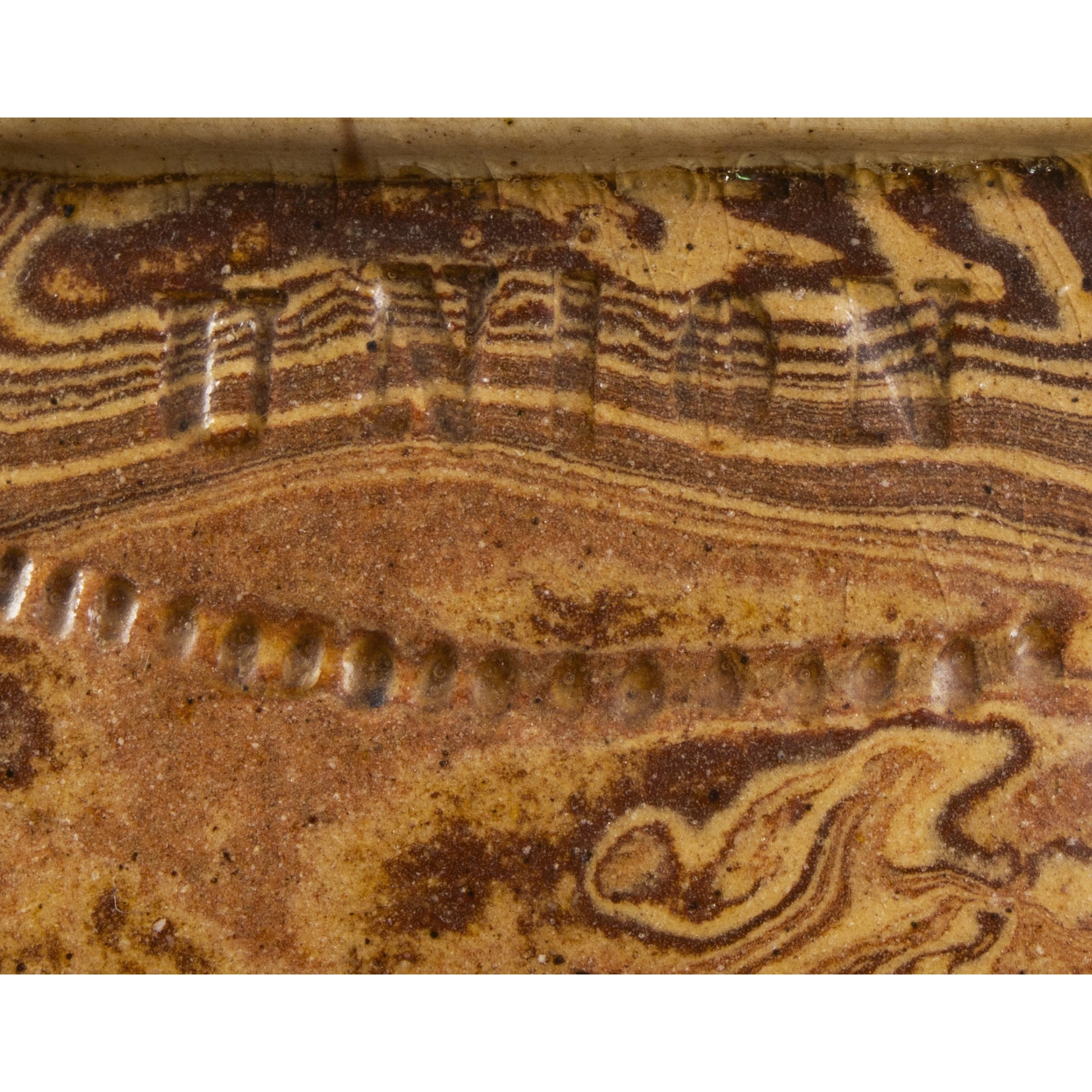
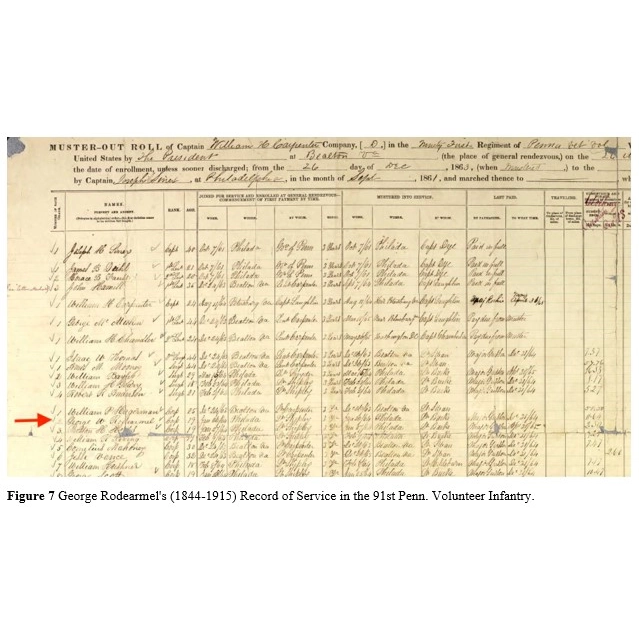
The word “UNION” is stamped below each figure of Lady Liberty, where there is also a Civil War connection with Henry Rodearmel; his son, George Rodearmel (1844-1915) served in the 91st Pennsylvania Volunteer Infantry (Figure 7), which was a Union infantry regiment that fought in multiple key engagements of the American Civil War, including the Battle of Fredericksburg, the Battle of Chancellorsville and the Battle of Gettysburg.
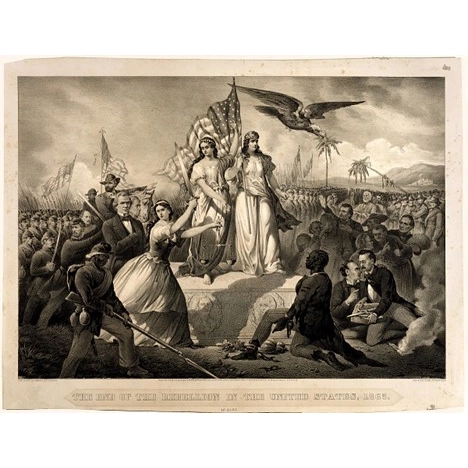
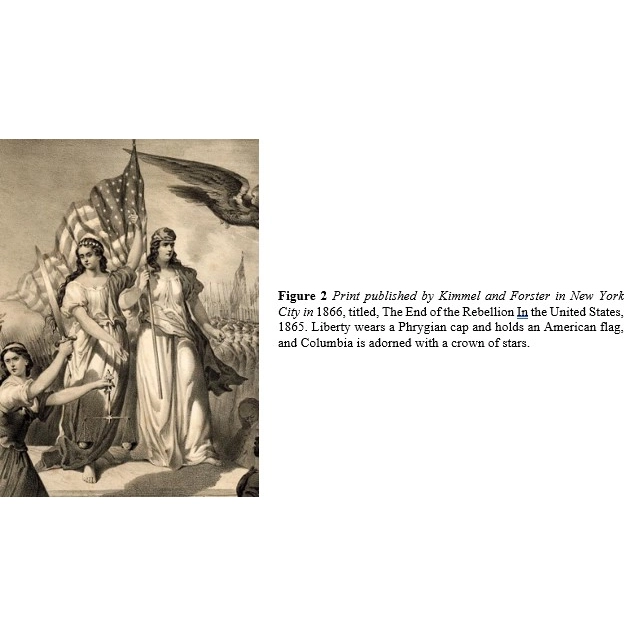
Lady Liberty was also portrayed on a print published by Kimmel and Forster in New York City in 1866, titled, The End of the Rebellion In the United States, 1865 (Figure 2). According to the National Museum of American History at the Smithsonian Institution, “The print features a symbolic representation of the downfall of the Confederacy and the end of the Civil War. Upon an altar carved with relief portraits of Washington and Lincoln, stand two robed females figures, Liberty, who wears a Phrygian cap and holds an American flag, and Columbia, who is adorned with a crown of stars. Below them to the left, Lady Justice triumphantly raises her sword and balance. In the foreground of the scene, a black soldier and a freedman kneel before the central pedestal. Behind Liberty stand President Andrew Johnson and the Union generals, Grant, Sherman, and Butler. In the background, behind these officers, an outfit of solemn, well-postured Union troops face opposite a disorganized grouping of defeated Southern fighters. A selection of notable Confederates is gathered in the right of the scene, including Jefferson Davis, Robert E. Lee, and John Wilkes Booth. An eagle grasping thunderbolts flies above all these figures and in the background, an American flag waves over Fort Sumter.”
It is also important to note that sprig molds were used by several American red earthenware and stoneware potters in the nineteenth century, including those located in New York, Pennsylvania and Ohio, some of which incorporated various designs of American Eagles. The Great Seal was also a popular means of design used by some nineteenth century American stoneware potters on monumental and presentation objects; Baltimore, Charlestown, Massachusetts, etc.
Item Date: Circa 1868
Measurement: Stands 10.25” Tall
Material: Earthenware
Item Condition: As-Made Condition
Literature: This pitcher is published in Figure 20.17 in Justin W. Thomas’ book, America’s Great Awakening and Migration: The Red Earthenware of Western New York, Volume II (Historic Beverly, 2025). Thomas, Justin W. “Nathaniel Sellers: A Postmaster and Potter of Upper Hanover, Pennsylvania.” Americana Insights 2025.
SKU 1431-27
For More Information, Please Contact David Hillier at 978-597-8084 or email drh@aaawt.com.
Please click on images to expand.